

The quick answer
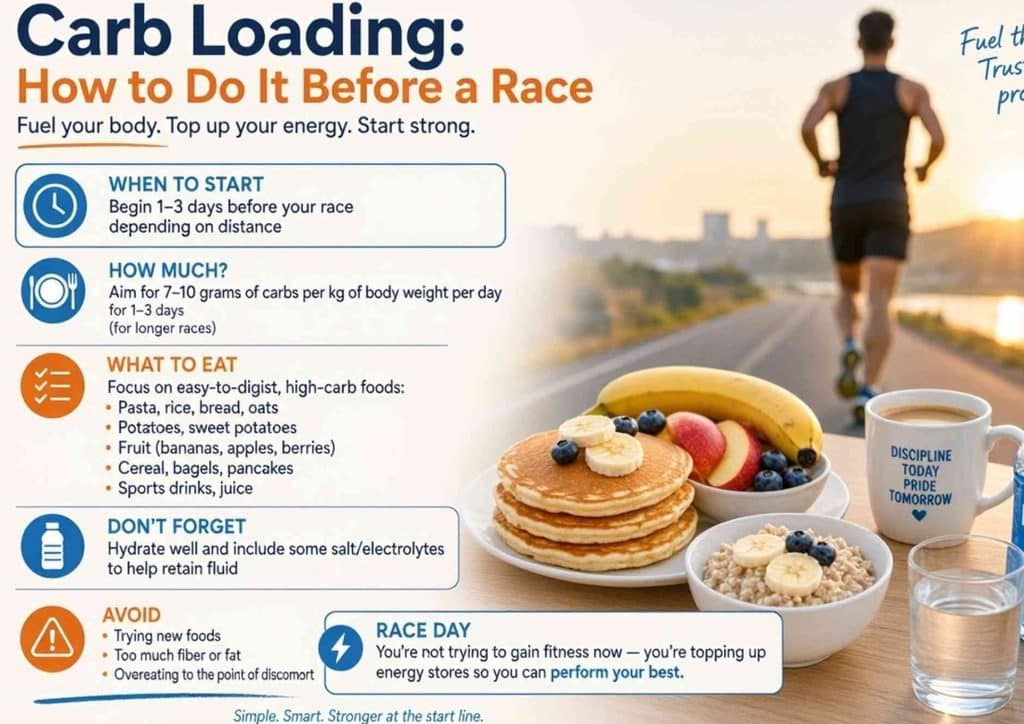
Carb loading is a sports nutrition strategy that involves increasing carbohydrate intake before an endurance event to maximise the amount of glycogen stored in your muscles and liver. It is particularly useful for endurance participants preparing for events lasting around 90 minutes or longer, such as marathons, long distance cycling events and triathlons, where maintaining energy availability becomes increasingly important.
The short version
- Carb loading is particularly important for endurance competitors competing in events lasting 90 minutes or longer, where muscle glycogen availability becomes increasingly important. Maximising carbohydrate stores before competition can help support sustained energy, maintain exercise intensity and delay fatigue.
- Increase your carbohydrate intake during the final one to two days before your event to maximise stored glycogen. Prioritise carbohydrate rich meals and snacks throughout the day rather than relying on one enormous pasta dinner the night before.
- Choose familiar, easily digested carbohydrate sources such as white rice, pasta, bread, bananas and lower fibre cereals during the final days before competition. Temporarily reducing high fibre foods can help minimise bloating, digestive discomfort and excessive food volume on race day.
Glycogen
Glycogen is the stored form of carbohydrate found primarily in your muscles and liver. It provides an important source of energy during exercise, particularly when training or competing at higher intensities. Increasing your carbohydrate intake before a prolonged endurance event helps maximise these stored energy reserves.

“I believe successful carb loading is about more than simply eating extra pasta the night before a race. It is about understanding how your body stores and uses energy, choosing the right foods and preparing strategically so you can arrive at the starting line properly fuelled and ready to perform”.
Jake Biggs, Nutrition Longevity

| Timeline & Target | Key Food Choices | Race-Prep Strategy |
|---|---|---|
| 48–72 Hours Out (8–10g Carbs/kg) |
White Rice, Pasta, Sourdough Bread & Potatoes | Maximises muscle glycogen supercompensation while tapering training volume. |
| 24–48 Hours Out (Low-Fibre Shift) |
Peeled Fruit, White Bagels, Pretzels & Oats | Reduces insoluble fibre and high fats to prevent mid-race GI distress and bloating. |
| Liquid Top-Ups (Throughout Day) |
Sports Drinks, Fruit Juice & Carbohydrate Mixes | Delivers high-density carbs effortlessly without excessive stomach fullness. |
| Night Before Race (Moderate Portion) |
Simple Pasta with Light Tomato Sauce & Lean Chicken | Tops up liver and muscle glycogen early so digestion is complete before sleep. |
| Race Morning (2–4 Hours Prior) |
White Toast with Jam/Honey, Banana & Energy Gel | Replenishes overnight liver glycogen depletion and stabilises blood glucose. |
| Hydration & Sodium (48 Hours Out) |
Water + Electrolyte Tabs & Lightly Salted Meals | Supports glycogen storage (each gram of glycogen binds ~3g of water) and fluid balance. |

Personalised carb loading calculator for your race
Optimise your race-day glycogen stores with a tailored carbohydrate loading strategy built around your event distance, taper schedule, and gut tolerance. Complete your race profile below to receive your custom fuelling targets.
Your Race-Day Carb Loading Blueprint
Based on your body mass of , your priority focus should be hitting your daily glycogen supercompensation window without overloading digestion.
Your tailored race-prep recommendations
Want a personalised race-day nutrition & fuelling plan?
I will review your race distance, sweat rate, and gut tolerance to build a step-by-step carb loading and race-day fuelling timeline tailored to your physiology.
Book a consultationThis interactive calculator provides educational guidance to support sports nutrition habits and is not a substitute for individualised clinical or sports dietetic advice.

“I built this interactive calculator because generic nutrition guides often leave people guessing how to translate broad carbohydrate targets into a practical plan. By factoring in your individual body mass, digestion, and personal goals, this tool bridges the gap between nutrition science and real-world execution so you can fuel effectively without digestive discomfort”.
Jake Biggs, Nutrition Longevity
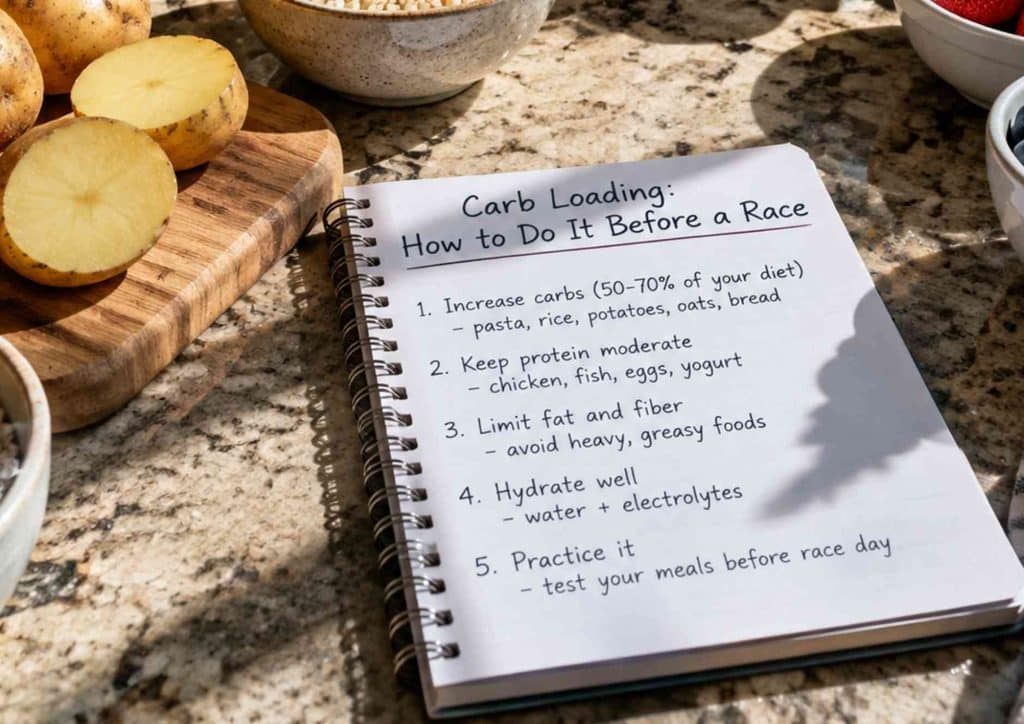
What is carb loading?
Carb loading is a nutritional strategy designed to increase the amount of glycogen stored in your muscles and liver before prolonged endurance exercise. When you eat carbohydrate containing foods, your digestive system breaks them down into glucose, which can be used immediately for energy or stored as glycogen for later use.
During endurance exercise, your muscles rely on a combination of carbohydrate and fat to produce energy. The contribution of each fuel source depends on exercise intensity, duration, training status and nutritional availability. As exercise intensity increases, your reliance on carbohydrate generally increases.
This is particularly important during longer events because your body’s stored carbohydrate reserves are limited. As these reserves become progressively depleted, maintaining your original exercise intensity can become more difficult.

| Common Myth | Evidence Based Fact | Practical Takeaway |
|---|---|---|
| Carb loading is just eating a giant bowl of pasta the night before a race. | A single meal cannot saturate muscle glycogen reserves, as effective supercompensation requires 36 to 48 hours of targeted carbohydrate intake alongside tapered training. | Spread 8 to 10g of carbohydrates per kilogram of body mass evenly across the final two days before race morning. |
| Gaining 1 to 2 kg on the scales means you have gained body fat. | Each gram of stored glycogen binds approximately 3 grams of water, so a temporary increase in body mass is a positive sign that your fuel tanks are full. | Expect a slight scale bump during a successful carb load, as this stored water helps maintain hydration during the race. |
| You need to carb load for every race, including a 5 km or 10 km run. | Standard daily glycogen stores easily fuel intense efforts lasting under 90 minutes without requiring a loading protocol over several days. | Reserve structured carb loading for events exceeding 90 minutes, such as half marathons, marathons, and endurance rides. |
| High fibre wholegrains and vegetables are best during a carb load. | Excess dietary fibre adds gut bulk and slows gastric emptying, significantly increasing the risk of bloating and gastrointestinal distress during your race. | Switch to low fibre, easily digested carbohydrates like white rice, sourdough, peeled fruit, and sports drinks 48 hours out. |

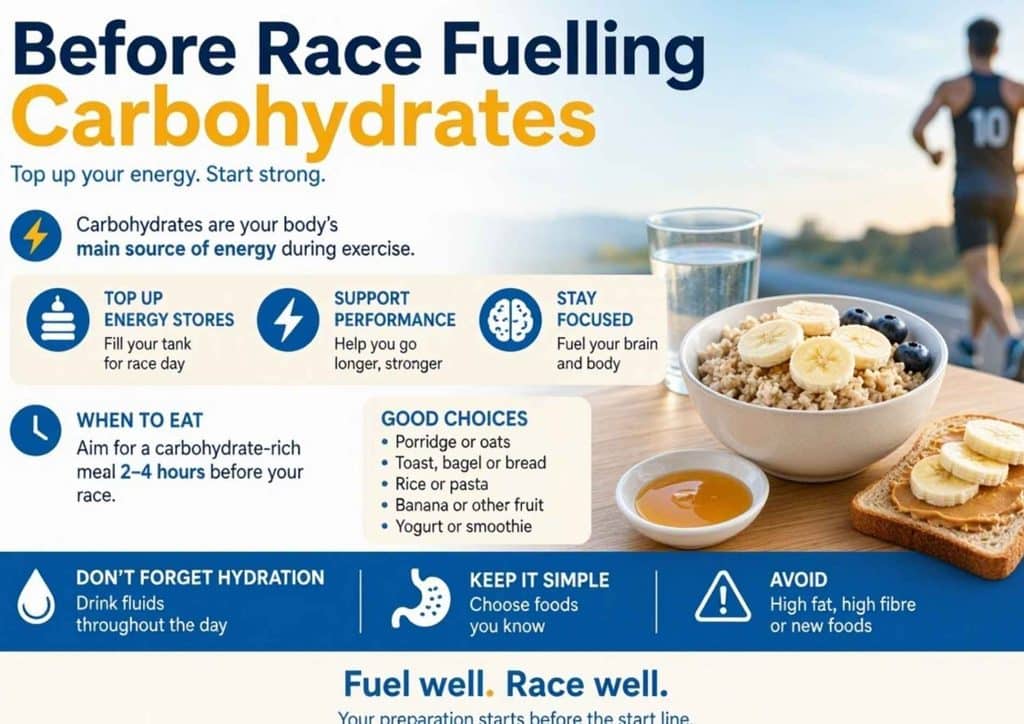
Why is glycogen important for endurance performance?
Muscle glycogen provides an important fuel source for working muscles, while liver glycogen helps maintain blood glucose levels during exercise. Both play an important role in supporting prolonged physical activity.
Think about running a marathon. During the early kilometres, you may feel comfortable maintaining your planned pace. However, as the event progresses, your available carbohydrate reserves become increasingly important for sustaining that effort.
If carbohydrate availability becomes insufficient, you may experience increasing fatigue, reduced exercise intensity and difficulty maintaining your planned pace.
This is one reason why endurance enthusiasts need to think beyond what they eat on race morning. Their nutritional preparation should begin well before arriving at the starting line. Understanding the science of nutrition for athletes also means considering how carbohydrate intake, protein requirements and overall energy availability change between training days, rest days and competition.
| Fuel Reserve | How It Powers Your Race | Race Day Impact |
|---|---|---|
| Muscle Glycogen | Stored directly inside working muscles to power every stride, pedal stroke, and high intensity surge. | Drives sustained speed and delays heavy legs during prolonged aerobic efforts. |
| Liver Glycogen | Releases glucose steadily into the bloodstream to keep blood sugar stable and your brain focused. | Prevents dizziness, mental fog, and sudden energy crashes late in your event. |
| Finite Storage Capacity | Unlike body fat, your body can only bank a limited supply of glycogen, which burns rapidly at race pace. | Once reserves run low, holding your target pace becomes noticeably harder. |
| Multi Day Preparation | One race morning breakfast cannot fill depleted tanks; full saturation requires strategic intake ahead of time. | Starting with full glycogen stores allows you to finish strong instead of fading early. |

Does carb loading mean eating as much as possible?
No. Carb loading does not mean eating unlimited amounts of pasta, bread, rice or sugary foods in the days before an event.
The objective is to increase carbohydrate availability in a planned and structured way, while keeping meals comfortable and manageable. Eating considerably more than your body needs can leave you feeling excessively full, uncomfortable and distracted by digestive symptoms.
Your carbohydrate intake should reflect your event, training demands, body size and individual tolerance.

| Key Factor | Strategic Carb Loading | Unplanned Overeating |
|---|---|---|
| Overall Portion Approach | Planned, structured increases in carbohydrate rich foods tailored to your body mass. | Eating unlimited amounts of pasta, bread, rice, and sugary foods without structure. |
| Macronutrient Balance | Shifts total energy toward carbohydrates by slightly reducing dietary fats and excess protein. | Adds extra carbohydrates on top of heavy meals, causing excessive calorie overload. |
| Digestive Comfort | Keeps meals light, easily digested, and comfortable so your stomach feels settled. | Leaves you feeling overly full, sluggish, bloated, and distracted by gut symptoms. |
| Personal Calibration | Matches your specific event distance, taper workload, body size, and gut tolerance. | Ignores individual physiology and risks compromising performance on race morning. |

Who actually needs to carb load?
Carb loading is primarily useful for active runners participating in endurance events lasting approximately 90 minutes or longer, particularly when they intend to maintain a moderate to high exercise intensity throughout the event.
For shorter activities, your normal daily carbohydrate intake and pre exercise meal are generally sufficient. There is usually no need to deliberately increase carbohydrate intake for a short recreational run, gym session or brief sporting competition.

| Activity Type | Example Events | Fuelling Requirement |
|---|---|---|
| Endurance Events (90+ Minutes) | Half marathons, full marathons, long distance cycling, triathlons, and endurance swims. | Structured carb loading is beneficial to saturate glycogen reserves for sustained moderate to high intensity. |
| Multi Day Competitions | Stage races, weekend sporting tournaments, and back to back endurance sessions. | Targeted carb loading helps replenish depleted fuel stores rapidly between consecutive efforts. |
| Short Duration Exercise (Under 90 Minutes) | 5 km or 10 km fun runs, standard gym workouts, and recreational club matches. | No carb load needed; your everyday balanced diet and a normal pre exercise meal provide ample fuel. |

Which active competitors benefit from increasing carbohydrate intake?
Marathon runners, long distance cyclists, triathlon, and endurance competitors are among those who may benefit from increasing their carbohydrate intake before competition.
For example, someone preparing for a marathon has substantially different nutritional requirements from someone completing a recreational 5 km run. The duration of exercise, expected intensity and overall energy demands influence how much preparation is required.
Competitors competing in long distance events should also consider their nutrition during the event itself. Pre event preparation cannot completely replace the need to consume appropriate carbohydrate and fluids during prolonged exercise.

| Event Category | Energy & Intensity Profile | Recommended Fuelling Approach |
|---|---|---|
| Marathon & Distance Running | Sustained high effort over several hours that steadily drains stored muscle glycogen. | Build carbohydrate reserves ahead of race day and top up with gels or sports drinks during the event. |
| Road Cycling & Triathlon | Extended aerobic output across multiple hours with substantial total kilojoule expenditure. | Maximise glycogen stores before the start and maintain steady mid race fluid and carbohydrate intake. |
| Long Course Endurance Events | Prolonged duration and intense pacing that place heavy demands on internal fuel tanks. | Pair pre event carb loading with planned on course nutrition, as pre loading alone cannot sustain hours of racing. |
| Recreational 5 km & Short Races | Brief duration where baseline daily glycogen easily supports your pace from start to finish. | Stick to your regular balanced meals and a familiar pre race snack without extra carb loading. |
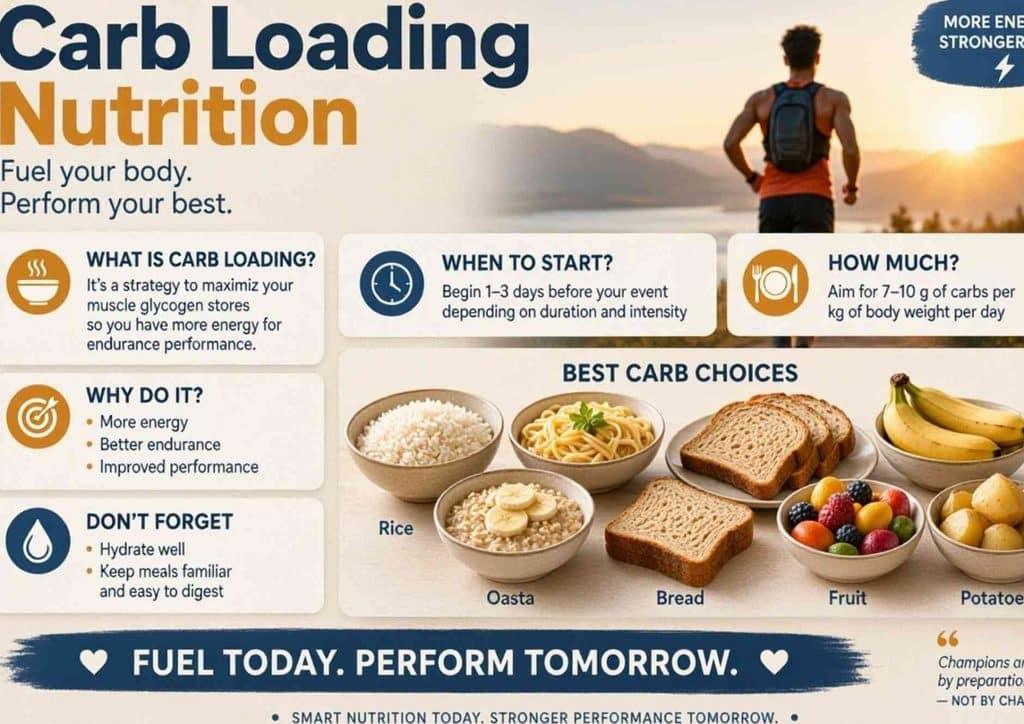
Marathon runners
Marathon runners need to consider carbohydrate availability throughout their preparation, particularly during longer training sessions and in the final days before competition.
A marathon can place considerable demands on the body’s glycogen stores. Increasing carbohydrate intake before race day can help maximise these reserves and support sustained exercise.
Working with a marathon nutritionist can help runners develop a structured approach to pre race nutrition, race day fuelling and recovery.

| Preparation Stage | Physiological Focus | Practical Action |
|---|---|---|
| Long Training Sessions | Builds muscular endurance while training the digestive system to absorb carbohydrates under fatigue. | Practise your exact race day carbohydrate intake during peak weekend long runs to build gut comfort. |
| Final 36 to 48 Hours Pre Race | Maximises muscle and liver glycogen reserves to meet the heavy energy demands of 42.2 km. | Increase low fibre carbohydrate intake while tapering running volume to saturate fuel stores. |
| Race Day & Post Race Recovery | Sustains target marathon pace without hitting the wall and accelerates post race tissue repair. | Follow a structured plan across pre race meals, on course fuelling, and post finish replenishment. |
| Individualised Guidance | Tailors carbohydrate targets, hydration, and meal timing to your body mass and stomach tolerance. | Consult a marathon nutritionist to map out a reliable, personalised marathon fuelling blueprint. |

Triathlon competitors
Triathlon racers have additional nutritional considerations because they combine swimming, cycling and running within one event. Depending on the distance, competition can involve several hours of continuous physical activity.
Carbohydrate availability becomes particularly important when triathlon competitors need to maintain performance across multiple disciplines without sufficient opportunities for substantial meals.
A triathlon nutritionist can help coordinate carbohydrate intake across training, pre competition preparation and the event itself.

| Competition Phase | Multi Discipline Demand | Practical Action |
|---|---|---|
| Pre Event Carb Loading | Builds full glycogen stores across upper and lower body muscles ahead of swim, bike, and run segments. | Follow a structured 36 to 48 hour carbohydrate loading protocol tailored to your race distance. |
| Bike Leg Opportunities | Provides the most stable window to digest carbohydrates and fluids before the high impact run leg. | Prioritise easy to consume gels, chews, and sports drinks on the bike since full meals are impractical. |
| Run Leg & Late Race | Sustains blood glucose and muscle energy after hours of continuous multi sport exertion. | Maintain steady, practised carbohydrate top ups on course to protect your pace through the finish. |
| Specialist Support | Coordinates nutrition seamlessly across brick sessions, race week preparation, and transition timing. | Work with a sports nutritionist to build a tailored multi discipline fuelling and hydration schedule. |

Recreational runners
Recreational runners completing shorter distances generally do not need a formal carbohydrate loading strategy.
However, this does not mean carbohydrate is unimportant. Eating enough carbohydrate throughout the week helps support training, recovery and normal energy requirements.
Working with a running nutritionist can help recreational and competitive runners develop personalised nutrition strategies that support training performance, endurance, race preparation and recovery.
Understanding nutrition for runners is also important for distinguishing between everyday carbohydrate intake, pre-exercise fuelling and deliberate carbohydrate loading before prolonged endurance events.

Do team sport players need to carb load?
Most team sport players do not need a formal carbohydrate loading strategy before every match. However, carbohydrate availability is still important for sports involving repeated sprinting, acceleration, changes of direction and sustained physical activity.
Sports such as football, rugby, hockey and basketball can place substantial demands on muscle glycogen, particularly during tournaments or multiple matches over consecutive days.
In these circumstances, increasing carbohydrate intake before competition may be worth considering as part of a broader sports nutrition customised plan.

| Competition Scenario | Physiological Demand | Practical Fuelling Approach |
|---|---|---|
| Standard Weekly Fixtures | Single matches with several recovery days allow normal glycogen restoration between games. | A formal carb load is rarely required; focus on consistent daily carbohydrates and a solid pre match meal. |
| High Intensity Match Play | Football, rugby, hockey, and basketball rely heavily on glycogen for repeated sprints and sharp accelerations. | Ensure pre game meals prioritise easily digested carbohydrates to support explosive speed and agility. |
| Tournaments & Consecutive Games | Multiple fixtures across a weekend or short turnaround severely deplete muscle glycogen reserves. | Deliberately increase carbohydrate intake before and between matches to maintain late game performance. |
| Customised Team Nutrition | Balances match day fuelling, position specific workloads, and rapid post game recovery. | Tailor carbohydrate targets to your playing minutes, schedule density, and individual energy needs. |

How to carb load in the days before a race
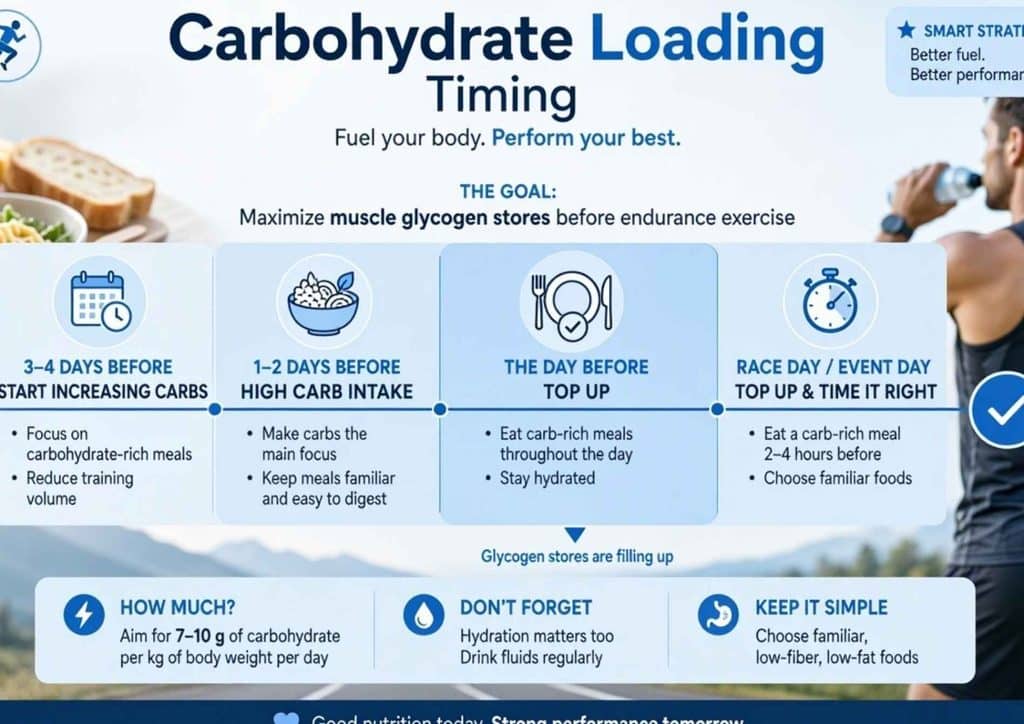
The most practical approach is to increase carbohydrate intake during the final one to two days before a prolonged endurance event, while reducing foods that are particularly high in fibre if they tend to cause digestive discomfort.
The goal is to maximise stored carbohydrate without introducing unnecessary digestive stress. This is not the time to experiment with unfamiliar meals, supplements or completely different eating patterns.

| Core Principle | What to Do | Why It Matters |
|---|---|---|
| Timing Window | Increase your daily carbohydrate intake steadily across the final 24 to 48 hours before the start line. | Gives your muscles sufficient time to saturate glycogen stores without last minute stomach overload. |
| Fibre Management | Scale back heavy wholegrains, raw vegetables, and legumes if you are prone to gut sensitivity. | Reduces bowel bulk and minimises bloating, cramping, or gastrointestinal discomfort on race morning. |
| Familiar Food Choices | Stick strictly to well tolerated, trusted meals, snacks, and hydration products practised in training. | Eliminates the risk of unexpected digestive upset from new supplements or unfamiliar eating patterns. |
| Energy Balance | Prioritise carbohydrate rich portions while keeping heavy fats and excessive protein moderate. | Maximises glycogen storage efficiently while keeping meals light, comfortable, and easy to digest. |

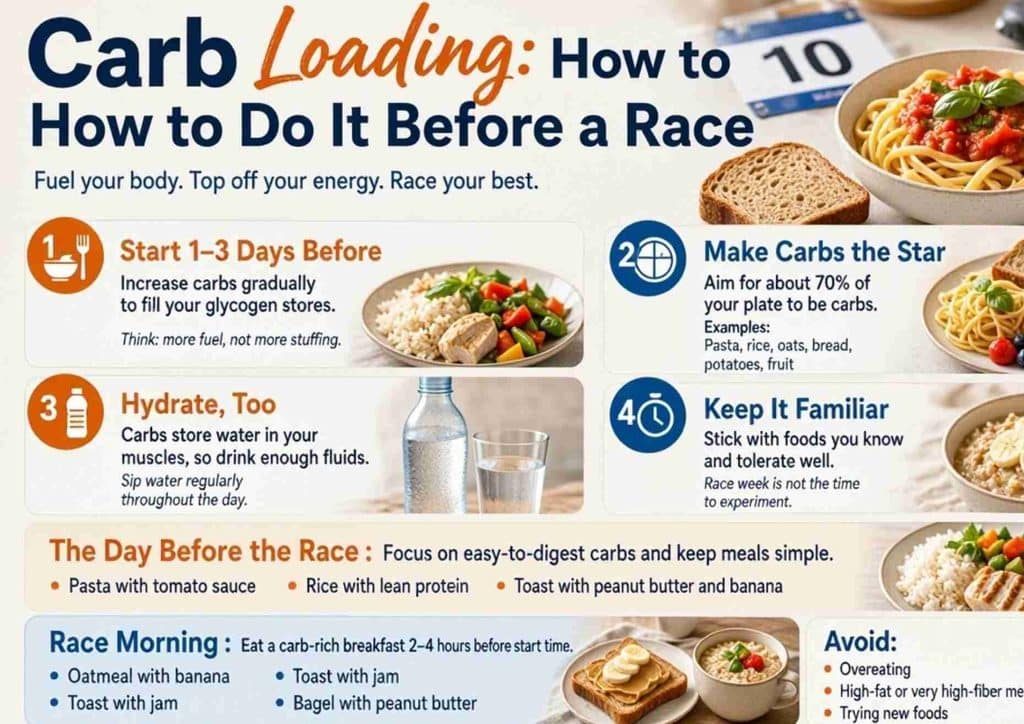
Two days before the event
Start prioritising carbohydrate containing foods across breakfast, lunch, dinner and snacks.
Include familiar foods such as white rice, pasta, bread, potatoes, breakfast cereal, bananas and yoghurt. You can continue eating protein containing foods such as chicken, fish, eggs and tofu, but avoid allowing very large protein portions to displace the carbohydrate your body needs.
It is also worth considering your overall food volume. Larger portions of carbohydrate rich foods can be easier to tolerate than trying to consume excessive amounts of vegetables, legumes and high fibre grains at every meal.
| Nutrition Focus | Practical Food Choices | Key Guideline |
|---|---|---|
| Consistent Meal Distribution | Prioritise carbohydrate rich staples across breakfast, lunch, dinner, and regular daytime snacks. | Spreading intake evenly across the day saturates glycogen steadily without feeling overly stuffed. |
| Easy to Digest Staples | Choose familiar options such as white rice, pasta, bread, potatoes, breakfast cereal, bananas, and yoghurt. | Delivers concentrated energy in manageable portions that sit comfortably in your stomach. |
| Moderate Protein Portions | Include lean protein sources like chicken, fish, eggs, or tofu alongside your carbohydrate base. | Keep protein servings moderate so they do not crowd out room for the carbohydrates your muscles need. |
| Smart Volume & Fibre Control | Scale back bulky vegetables, legumes, and heavy wholegrains in favour of lower fibre carbohydrate foods. | Prevents excess gut volume and digestive heaviness while still hitting high daily carbohydrate targets. |

One day before the event
Continue prioritising carbohydrate and keep your meals relatively simple.
This is where food selection becomes particularly important. White rice, regular pasta, white bread, lower fibre cereals and peeled potatoes can provide carbohydrate without adding excessive fibre or food volume.
You should also maintain normal hydration. There is no advantage in forcing excessive amounts of water, particularly if you are already adequately hydrated.
Avoid alcohol and be cautious with particularly fatty, spicy or unfamiliar meals if these tend to upset your stomach.
| Priority Area | Recommended Approach | Race Morning Benefit |
|---|---|---|
| Low Fibre Carbohydrate Staples | Focus on simple options like white rice, regular pasta, white bread, low fibre cereals, and peeled potatoes. | Tops off final glycogen stores without adding heavy gut bulk or excess dietary fibre. |
| Steady Hydration | Sip fluids normally throughout the day rather than forcing excessive amounts of plain water. | Maintains optimal fluid balance without diluting electrolytes or disrupting your sleep. |
| Digestive Triggers to Avoid | Skip alcohol and steer clear of rich, greasy, spicy, or unfamiliar meals the night before. | Protects sleep quality and prevents stomach irritation or gut distress on race day. |
| Simple Evening Meal | Keep dinner familiar, moderate in size, and eaten early enough for comfortable digestion before bed. | Ensures you wake up feeling light, rested, and ready for your pre race breakfast. |

What should you eat on race morning?
Your race morning meal should provide carbohydrate that is familiar, easy to digest and appropriate for the time available before exercise.
Ideally, eat approximately two to four hours before the event, depending on your individual tolerance and the start time. Choosing appropriate pre workout snacks can also help you understand how to fuel before exercise, particularly when you have limited time between eating and starting your session.
Examples include:
- White toast with honey or jam and a banana.
- Porridge made with milk or soy milk, provided you tolerate it comfortably.
- A bowl of lower fibre breakfast cereal with milk.
- A plain bagel with honey or jam.
- White rice with a small amount of protein if this is something you regularly eat before exercise.
Avoid making race morning the first time you try a particular breakfast. Your digestive system should be familiar with the foods you intend to eat.

| Race Morning Factor | Practical Strategy | Performance Benefit |
|---|---|---|
| Optimal Meal Timing | Aim to eat 2 to 4 hours prior to your start time, adjusting based on your individual gut comfort and schedule. | Allows sufficient digestion while topping up liver glycogen depleted overnight. |
| Classic Toast & Bagel Options | Choose white toast or a plain bagel topped with honey or jam, paired with a ripe banana. | Delivers fast absorbing, low fibre carbohydrates that settle quickly before racing. |
| Cereal, Porridge & Rice Meals | Opt for porridge with milk or soy milk, low fibre breakfast cereal, or white rice with a touch of lean protein. | Provides sustained blood glucose stability when matched to foods your body already knows well. |
| Golden Rule of Familiarity | Never test a brand new breakfast, drink, or supplement for the first time on race morning. | Eliminates unexpected stomach cramps, bloating, or mid race digestive setbacks. |

Sample carbohydrate loading day
The following example demonstrates how an endurance competitor might organise meals during the final day before a long distance event. Portions should be adjusted to individual requirements, body size and event demands.
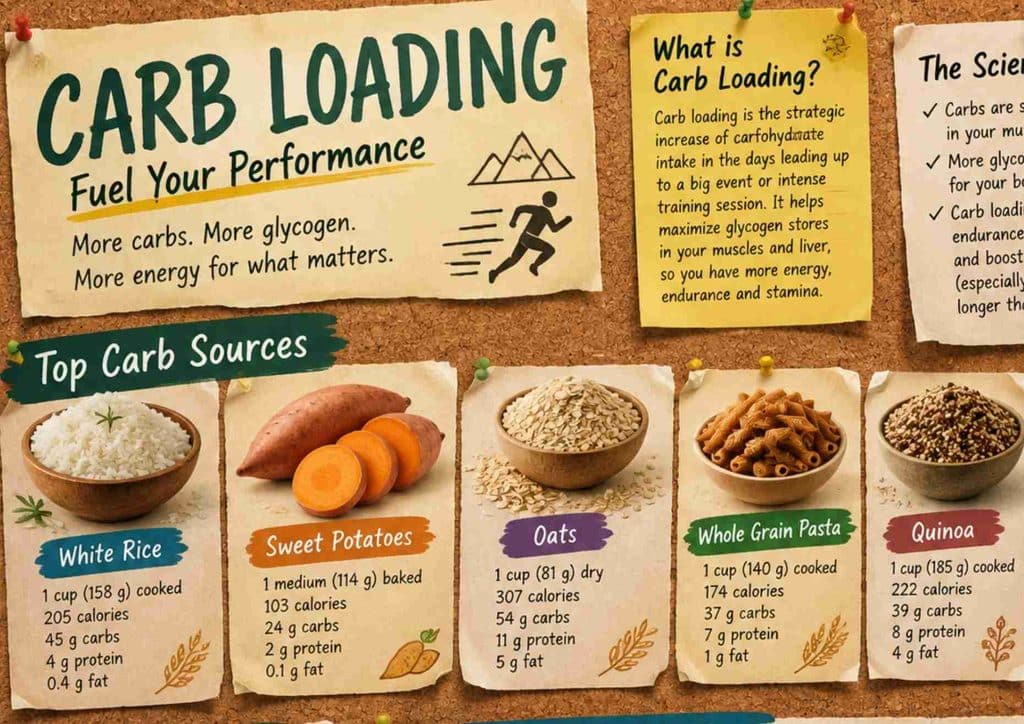
| Meal | Example | Tip |
|---|---|---|
| Breakfast | White toast with honey, banana and yoghurt | Choose familiar foods that sit comfortably |
| Morning snack | Banana and a plain bagel | Spread carbohydrate intake across the day |
| Lunch | White rice with chicken and cooked vegetables | Make rice the main component of the meal |
| Afternoon snack | Rice cakes with jam and a glass of juice | Convenient carbohydrate between meals |
| Dinner | Pasta with tomato based sauce and a small portion of lean chicken | Keep the meal familiar and avoid excessive fat |
| Evening snack | Breakfast cereal with milk or a banana | Add carbohydrate if needed to meet your daily requirements |
How much carbohydrate should you eat?
Carbohydrate requirements during the final days before an endurance event depend on the distance, duration, exercise intensity and individual characteristics of the competitor.
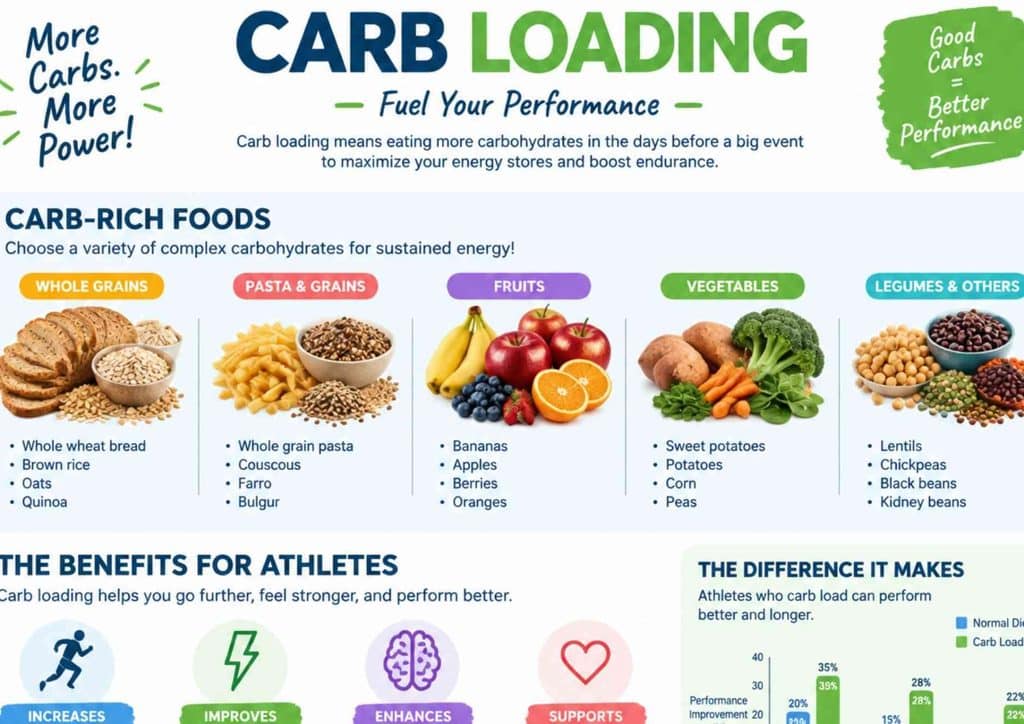
For prolonged endurance events, sports nutrition guidelines commonly use approximately 10 to 12 grams of carbohydrate per kilogram of body weight per day during a short carbohydrate loading period.
This is a high carbohydrate intake and is not necessary for every competitor or every event. It should be considered in the context of the event, individual tolerance and overall nutritional requirements.
For example, an active individual weighing 70 kg would have a theoretical target of 700 to 840 grams of carbohydrate per day using this approach. This can be difficult to achieve without careful food selection and planning.
It is also important to recognise that carbohydrate loading is not simply about reaching a number. Food choices, digestive tolerance, hydration and appropriate fuelling during the event all contribute to preparation.
| Key Consideration | Guideline & Context | Practical Application |
|---|---|---|
| Standard Loading Target | Guidelines commonly recommend 10 to 12 grams of carbohydrate per kilogram of body mass per day for prolonged events. | Designed for major endurance races rather than every competitor or shorter weekend events. |
| Real World Example (70 kg) | A 70 kg competitor targeting 10 to 12 g/kg would aim for roughly 700 to 840 grams of carbohydrate daily. | Requires deliberate meal planning and compact, low fibre carbohydrate choices to achieve comfortably. |
| Individual Calibration | Daily targets depend on event duration, expected intensity, body size, and personal digestive capacity. | Adjust intake to match what your stomach tolerates smoothly rather than forcing uncomfortable volumes. |
| Beyond the Numbers | Hitting a gram target alone does not guarantee peak performance without smart food selection and hydration. | Combine pre race loading with steady fluid balance and planned on course fuelling during your event. |

Foods that make carb loading easier
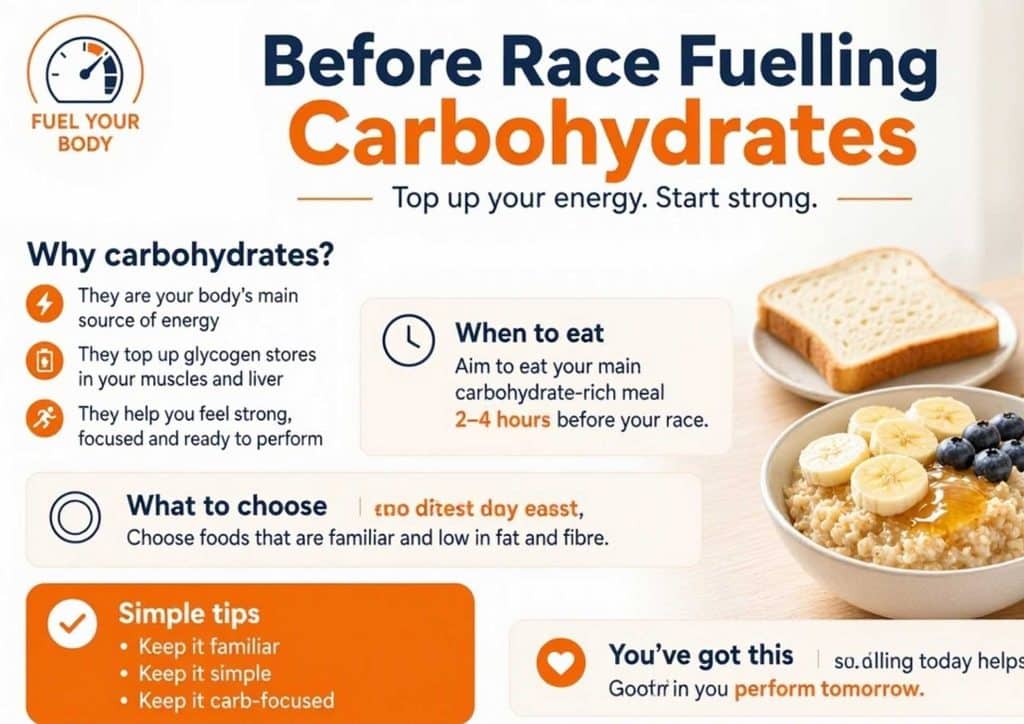
The most useful foods are familiar carbohydrate rich options that provide sufficient energy without creating unnecessary digestive discomfort.
During the final one to two days, lower fibre carbohydrate sources can be particularly helpful because they generally reduce the amount of food residue moving through the digestive system.

| Food Category | Recommended Options | Digestive Benefit |
|---|---|---|
| Compact Grains & Starches | White rice, regular pasta, white bread, plain bagels, and low fibre breakfast cereals. | Delivers high carbohydrate density in smaller, easily managed portions that sit comfortably. |
| Potatoes & Root Vegetables | Peeled white potatoes and sweet potatoes prepared without heavy, fatty skins or butters. | Provides easily absorbed starches while keeping fiber residue low before race day. |
| Fruits & Dairy Snacks | Ripe bananas, fruit juices, honey, jam, plain yoghurt, and flavoured milk drinks. | Offers quick energy top ups and refreshing fluids without overloading your stomach. |
| Low Residue Approach | Focus on foods that minimise digestive bulk and reduce gut transit irritation during the final 48 hours. | Keeps your digestive tract feeling light, settled, and fully prepared for the start line. |

Which carbohydrates should you prioritise?
Consider including:
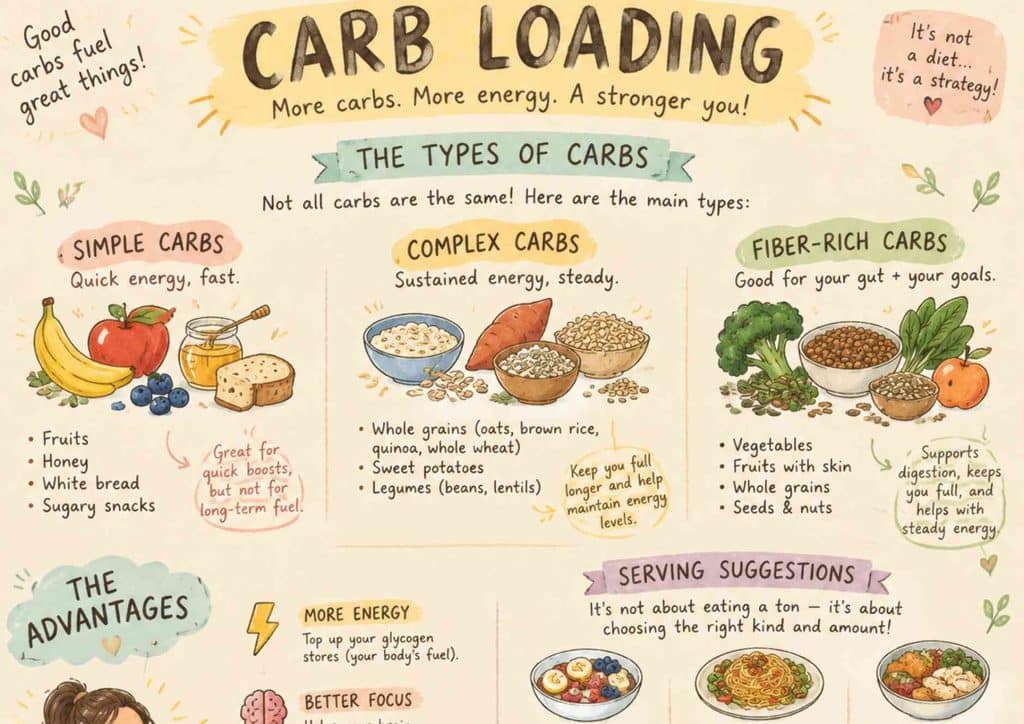
- White rice.
- Regular pasta.
- White bread and bread rolls.
- Bagels.
- Rice cakes.
- Potatoes without their skin.
- Bananas.
- Breakfast cereals.
- Honey and jam.
- Fruit juice.
- Lower fibre crackers.
- Yoghurt with cereal, if tolerated.
These foods can be combined throughout the day to increase carbohydrate intake without relying on excessively large meals.

| Carbohydrate Source | Recommended Options | Practical Loading Benefit |
|---|---|---|
| Breads, Grains & Rice | White rice, regular pasta, white bread, bread rolls, bagels, and rice cakes. | Provides compact, low fibre energy that is easy to portion and digest across meals. |
| Potatoes & Crackers | Potatoes prepared without skins and lower fibre crackers. | Delivers starchy carbohydrates while minimising heavy gut bulk and digestive residue. |
| Sweet Spreads & Juices | Honey, jam, fruit juice, and ripe bananas. | Offers rapid energy top ups that are simple to consume between main meals and snacks. |
| Cereals & Dairy Combinations | Breakfast cereals and yoghurt paired with cereal if tolerated comfortably. | Allows you to combine foods throughout the day to hit targets without feeling overly stuffed. |

Should you avoid vegetables and wholegrains?
No. Vegetables and wholegrains remain important components of a healthy diet and should not be routinely removed from your everyday eating pattern.
However, during the final one to two days before a prolonged endurance event, temporarily reducing particularly high fibre foods can help minimise digestive discomfort and excessive food volume.
For example, instead of choosing a large serving of brown rice with beans, broccoli and lentils immediately before a marathon, you might choose white rice with chicken and a smaller portion of cooked vegetables.
This is a temporary adjustment for race preparation, not a recommendation to avoid fibre long term.

| Strategy Focus | Daily Nutrition Context | Short Term Modification |
|---|---|---|
| Value of Fibre | Fibre rich vegetables and wholegrains form the foundation of lifelong health and standard training nutrition. | Never permanently banish whole foods from your long term eating habits. |
| Pre Event Window | Heavy fibrous foods create excess intestinal bulk and can trigger cramps when racing at high intensity. | Lighten your digestive load by curbing bulky legumes, beans, and raw greens during the final 48 hours. |
| Strategic Plate Swaps | Transition from bulky, fibrous meal structures to streamlined, energy dense alternatives. | Opt for white rice and lean poultry with tender cooked vegetables instead of heavy lentil and bean bowls. |
| Gastrointestinal Defence | Protects your stomach from bloating and sluggish digestion on race morning. | Ensures your gut stays calm, comfortable, and ready to perform from the starting gun. |

What about protein and dietary fat?
Protein remains important for muscle repair, recovery and maintaining normal physiological function. Understanding how much protein you need to build muscle can help you balance protein requirements with the higher carbohydrate intake needed during endurance preparation. Include moderate portions of familiar protein sources such as chicken, fish, eggs, yoghurt and tofu.
Dietary fat is also essential for health, but very high fat meals can slow gastric emptying and may leave some active competitors feeling uncomfortably full.
During the final preparation period, prioritise carbohydrate while keeping protein and fat intake appropriate rather than allowing large servings of either to dominate your meals.

| Macronutrient Role | Pre Event Approach | Digestive & Fuelling Benefit |
|---|---|---|
| Protein for Repair | Include moderate portions of familiar sources such as chicken, fish, eggs, yoghurt, and tofu. | Supports normal tissue recovery without crowding out the vital carbohydrates your muscles need. |
| Managing Dietary Fats | Keep heavy fats moderate and steer clear of very greasy meals during your final preparation window. | Prevents delayed stomach emptying so you avoid feeling sluggish, heavy, or overly full. |
| Macronutrient Prioritisation | Let carbohydrates lead your plate while keeping protein and fat balanced in the background. | Optimises glycogen storage efficiently while maintaining absolute digestive comfort. |

What should you drink?
Hydration should remain part of your race preparation, particularly when training or competing in warm conditions.
Water is generally appropriate for everyday hydration, while electrolyte-containing sports drinks may be useful in certain endurance situations, depending on sweat losses, environmental conditions and event duration. Understanding what causes muscle cramps during exercise can also help you better understand the potential contribution of fluid losses, electrolyte disturbances and exercise-related fatigue.
Carbohydrate containing sports drinks can also contribute to overall carbohydrate intake, although they should not be used as a substitute for an appropriately planned eating strategy.
Avoid drinking excessive amounts of fluid in an attempt to improve performance. Hydration should be individualised rather than based on forcing a particular volume.
Once your event is complete, recovery nutrition becomes the next priority. Understanding post workout meals can help you plan carbohydrate and protein intake to replenish glycogen stores and support muscle recovery after prolonged exercise.
| Hydration Focus | Fluid Selection & Usage | Performance Benefit |
|---|---|---|
| Everyday Water Intake | Rely on water as your primary hydration source, adjusting intake to match weather conditions and sweat rates. | Maintains normal fluid balance without overloading your stomach or disturbing electrolyte levels. |
| Electrolyte & Sports Drinks | Incorporate electrolyte beverages during heavy training or warm weather sessions to replace mineral losses. | Supports optimal nerve and muscle function when sweat losses are elevated. |
| Carbohydrate Drinks | Use sports drinks as a convenient liquid top up for carbohydrates, complementing your solid food strategy. | Contributes extra energy without forcing you to eat bulky solid meals when feeling full. |
| Avoiding Over Hydration | Drink according to your natural thirst and individual sweat profile rather than forcing excessive fluid volumes. | Prevents the risk of hyponatremia and eliminates uncomfortable sloshing in your stomach. |

Common carb loading mistakes
Many competitors make the mistake of treating carbohydrate loading as a single large meal rather than a planned nutritional strategy across the final days before competition.
The objective is to improve carbohydrate availability while keeping digestion, hydration and overall energy intake manageable.
| Common Mistake | Why Competitors Slip Up | Better Approach |
|---|---|---|
| The Last Minute Feast | Cramming massive amounts of food into a single heavy dinner the night before the race. | Spread your carbohydrate intake evenly across breakfast, lunch, dinner, and snacks over 48 hours. |
| Treating It As Overeating | Mistaking a strategic glycogen load for an excuse to gorge on heavy, greasy comfort foods. | Focus on clean, compact, low fibre carbohydrate sources that support performance without gut distress. |
| Ignoring Individual Tolourance | Copying rigid gram targets or unfamiliar meal plans without testing them during training. | Customise your intake to match your body mass, stomach comfort, and trusted foods. |
| Neglecting Hydration Balance | Forcing excessive water or ignoring electrolyte needs alongside increased carbohydrate stores. | Sip fluids naturally according to thirst and environmental conditions to stay comfortably hydrated. |

Eating too much fibre before race day
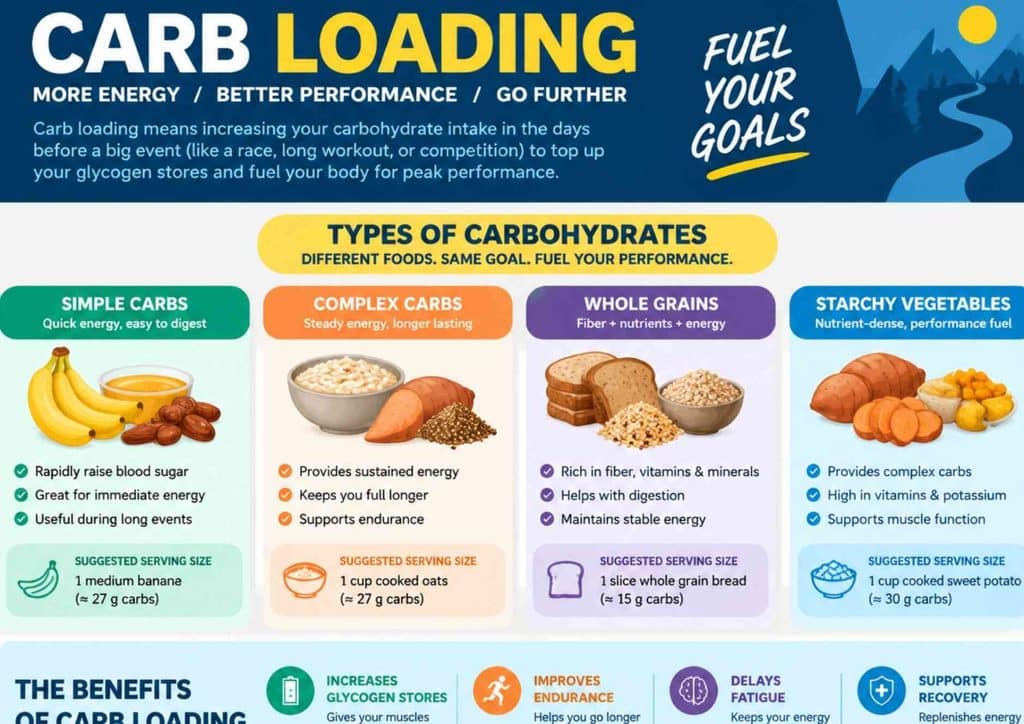
One common mistake is suddenly increasing wholegrains, legumes, vegetables and fruit because competitors associate these foods with healthy eating.
Although these foods are valuable throughout the year, consuming particularly large quantities immediately before a long endurance event may contribute to bloating, wind or changes in bowel habits.
This does not mean fibre is unhealthy. It simply means that the timing of certain food choices matters when preparing for prolonged exercise.
| Fibre Strategy | Physiological Context | Race-Day Advantage |
|---|---|---|
| Daily Base Nutrition | Consuming wholegrains, legumes, fruit, and vegetables regularly throughout general training cycles. | Supports long-term gut health, metabolic function, and overall nutrient density without event-day pressure. |
| Pre-Race Overloading | Sudden surges in high-fibre foods immediately prior to competition under the assumption of extra healthy eating. | Increases gut bulk and fermentation, frequently causing bloating, wind, and unexpected bowel disruption during exercise. |
| Strategic Tapering | Temporarily moderating roughage and high-fibre sources in the 24–48 hours leading into a major endurance event. | Lightens gut load and optimises gastrointestinal comfort, ensuring maximum energy availability without digestive distress. |

Leaving carbohydrate intake until the night before
Another mistake is eating very little carbohydrate throughout the week and then attempting to compensate with one enormous pasta dinner.
Increasing carbohydrate intake across the final one to two days is generally more practical than relying on a single meal.
A large dinner cannot automatically compensate for inadequate preparation earlier in the day.

| Carbohydrate Strategy | Physiological Mechanism | Race-Day Impact |
|---|---|---|
| Single Night-Before Feast | Attempting to cram total glycogen needs into one massive, heavy dinner right before race day. | Leads to gastrointestinal discomfort, disrupted sleep, and inadequate muscle glycogen saturation on the start line. |
| Phased 24–48 Hour Increase | Progressively scaling up carbohydrate intake across multiple main meals and snacks during the final one to two days. | Maximises muscle glycogen stores comfortably without overloading the digestive tract or causing heaviness. |
| Consistent Daily Base | Maintaining adequate baseline carbohydrates throughout the training week to match session demands. | Prevents deep chronic energy deficits, ensuring you enter the final pre-race taper with well-fuelled muscle tissue. |
Eating unfamiliar foods
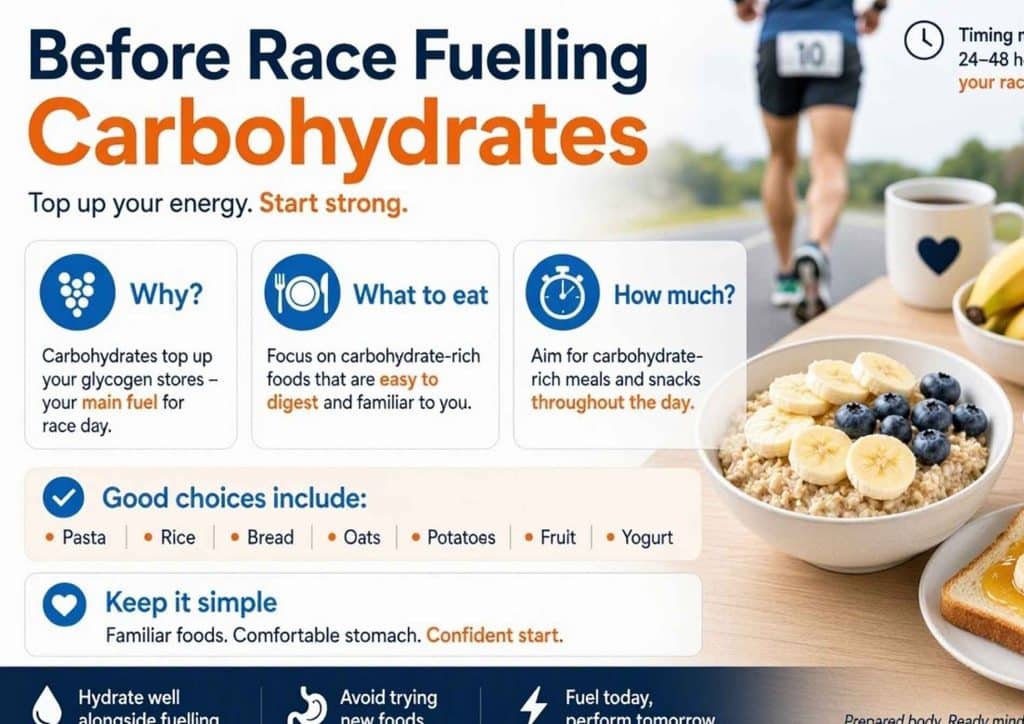
Race week is not the time to experiment with new supplements, energy products, unfamiliar restaurants or completely different meal combinations.
Even foods that are generally considered healthy can cause digestive discomfort if your body is not accustomed to them.
Practise your pre race meals during training so you understand what works for your individual digestive tolerance.

| Strategy Phase | Nutritional Focus | Performance Benefit |
|---|---|---|
| Race Week Experimentation | Introducing new sports supplements, unfamiliar dining spots, or untested meal combinations close to event day. | Increases the risk of unexpected gastrointestinal upset, cramping, and digestive disruption during competition. |
| Training Simulation | Trialling exact pre-race dinner and breakfast combinations during long key sessions throughout training blocks. | Establishes clear digestive tolerance and builds complete confidence in your fuelling strategy long before race day. |
| Race Day Execution | Sticking strictly to familiar, proven wholefoods and sports nutrition products that your body processes smoothly. | Guarantees optimal energy availability and gut comfort, allowing you to focus entirely on athletic performance. |
Forgetting about race day nutrition
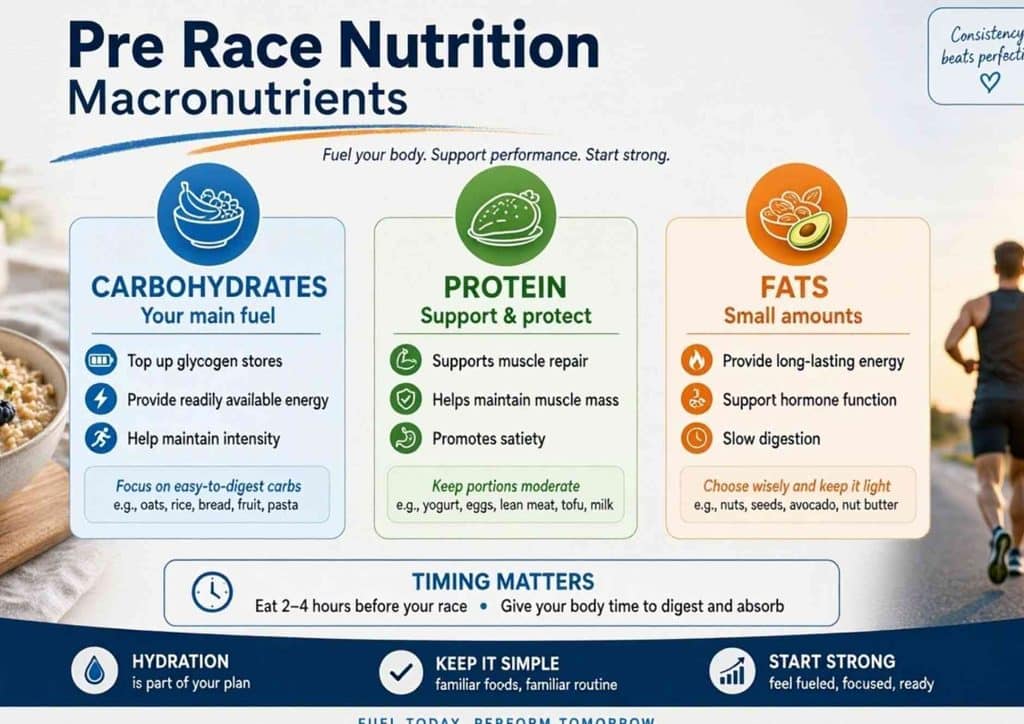
Carbohydrate loading is only one part of endurance fuelling.
During prolonged events, competitors may also need to consume carbohydrate to maintain availability as their stored glycogen is progressively used.
This might involve sports drinks, gels, chews or easily digested foods, depending on the event and individual preferences.
Your race day nutrition should be practised during longer training sessions rather than introduced for the first time during competition.
| Fuelling Strategy | Physiological Context | Race-Day Advantage |
|---|---|---|
| Beyond Carbo-Loading | Carbohydrate loading is only one initial part of comprehensive endurance fuelling. | Recognises that glycogen stores require ongoing maintenance during prolonged events to prevent hitting an energy slump. |
| Intra-Event Carbohydrates | Consuming sports drinks, gels, chews, or easily digested foods as stored glycogen is progressively used. | Maintains continuous carbohydrate availability, sustaining high physical output and energy levels throughout the duration of the event. |
| Practised Execution | Testing your race-day nutrition strategy during longer training sessions rather than introducing new products on event day. | Conditions the digestive system to tolerate intra-event fuelling smoothly and eliminates unexpected race-day surprises. |

Becoming concerned about the scales
Some competitors notice a temporary increase in body weight during carbohydrate loading and immediately assume they have gained body fat.
This is generally not the case.
When your body stores additional glycogen, it also stores additional water. This means body weight can increase temporarily as glycogen reserves become more fully replenished.
This is a normal physiological response and is not a reason to restrict carbohydrate intake before an important endurance event.

| Observation | Physiological Mechanism | Mindset & Strategy Impact |
|---|---|---|
| Temporary Weight Increase | Noticing a slight rise on the scales during a phased carbohydrate loading period. | Is frequently misconstrued as rapid fat gain, triggering unnecessary anxiety close to competition. |
| Glycogen-Water Binding | Every gram of stored muscle glycogen binds with approximately three to four grams of water. | Confirms that body weight increases temporarily as glycogen reserves become fully replenished for event day. |
| Normal Physiological Response | Fluid retention within muscle tissue is a required sign of optimal endurance preparation. | Prevents reactive carbohydrate restriction, ensuring full energy availability throughout your race. |

Trying to compensate with excessive exercise
Another mistake is adding extra training sessions to compensate for eating more carbohydrate.
The final days before competition should generally involve a reduction in training volume, allowing the body to recover and prepare for the event.
Increasing exercise unnecessarily can interfere with recovery and undermine the purpose of your preparation.
- Two days before your event, increase carbohydrate containing foods across meals and snacks.
- One day before your event, prioritise familiar lower fibre carbohydrate sources and maintain normal hydration.
- Keep protein portions moderate and avoid excessively fatty meals.
- Eat a familiar carbohydrate focused breakfast approximately two to four hours before starting, depending on tolerance.
- Follow your rehearsed race day fuelling and hydration strategy.

| Preparation Phase | Physiological Principle | Actionable Protocol |
|---|---|---|
| The Compensation Trap | Adding extra training sessions to “burn off” higher pre-race carbohydrate intake. | Avoid unnecessary workouts; tapering volume is essential to allow glycogen supercompensation and muscle tissue recovery. |
| Two Days Prior (48h) | Initiating progressive carbohydrate loading to fill muscle energy stores. | Increase carbohydrate-containing foods across all main meals and snacks without forcing excessive portion sizes. |
| One Day Prior (24h) | Optimising gut comfort and maintaining total body fluid volume. | Prioritise familiar, lower-fibre carbohydrate sources, keep protein moderate, avoid fatty meals, and hydrate normally. |
| Race-Day Morning | Topping up liver glycogen stores after the overnight fast. | Eat a familiar, carbohydrate-focused breakfast approximately two to four hours before start time, based on individual tolerance. |
| Event Execution | Sustaining blood glucose and fluid balance during competition. | Execute your rehearsed race-day fuelling and hydration strategy without introducing untested products. |

Keep your stomach settled
Spread carbohydrate across several meals and snacks rather than trying to eat enormous portions at once. Choose familiar, lower fibre foods and avoid experimenting with new supplements, gels or meals immediately before competition.

| Comfort Strategy | Physiological Mechanism | Race-Day Advantage |
|---|---|---|
| Spreading Intake | Distributing carbohydrate intake evenly across multiple regular meals and snacks rather than consuming enormous portions at once. | Prevents gastric overload, reduces stomach distension, and ensures steady nutrient absorption without sluggishness. |
| Lower-Fibre Choices | Selecting familiar, low-roughage carbohydrate sources in the final lead-up to competition. | Minimises bowel volume and intestinal gas, reducing the risk of unexpected gastrointestinal distress or urge during the race. |
| Zero Last-Minute Novelty | Strictly avoiding untested supplements, gels, chews, or new meal types immediately prior to event day. | Protects gut integrity and eliminates the primary cause of sudden stomach cramping and nausea under race pressure. |

Red flag: Get individual advice first
If you have diabetes, a gastrointestinal condition, a history of significant digestive symptoms or another medical condition affecting your nutritional requirements, seek individual advice from your GP and an appropriately qualified sports nutrition professional before making substantial changes to your carbohydrate intake. Carbohydrate loading can require careful consideration of medication, blood glucose management and individual dietary requirements.

| Clinical Consideration | Physiological Risk | Professional Protocol |
|---|---|---|
| Diabetes & Blood Glucose Control | Rapidly scaling carbohydrate intake can cause unpredictable blood glucose spikes or interfere with medication dosing. | Consult your GP and sports dietitian to calibrate insulin, medication timing, and exact carbohydrate targets safely. |
| Gastrointestinal Conditions | Pre-existing GI disorders or severe digestive history can aggravate symptoms under sudden dietary shifts. | Obtain tailored clinical guidance to map out low-FODMAP or stomach-friendly loading options that protect gut integrity. |
| Individualised Medical Guidance | Generic performance protocols do not account for complex medical histories or individual clinical needs. | Seek personalised support prior to making substantial changes, ensuring your race-day strategy is both safe and effective. |

“Endurance performance is not determined by what you eat the night before a race, but by how consistently you prepare, fuel and recover throughout your training”.
Jake Biggs, Nutrition Longevity

What to do this week
- Practise your pre race breakfast during a training session.
- Identify three familiar, lower fibre carbohydrate foods you tolerate well.
- Develop a race day fuelling plan that considers both pre event and during event nutrition.

How a sports nutritionist can help with customised carb loading
A sports nutritionist can help you develop a carbohydrate loading strategy that reflects your individual requirements, training schedule, body weight, event distance and digestive tolerance. Understanding what a sports nutritionist does can also help you appreciate the broader role of nutrition in training, competition preparation and recovery.
Although general carbohydrate loading guidelines provide a useful starting point, not every competitor needs the same amount of carbohydrate or the same approach. Your nutritional requirements will depend on the demands of your event, your training history and how well you tolerate different foods.

| Individual Variable | Clinical & Performance Context | Customised Strategy Advantage |
|---|---|---|
| Event Demands & Scale | Matching intake precise to event distance, duration, body weight, and expected metabolic expenditure. | Moves past generic guidelines to deliver exact gram-per-kilogram carbohydrate targets tailored specifically to your event. |
| Digestive Tolerance | Accounting for individual gut sensitivity, gut volume capacity, and preferred lower-fibre food formats. | Ensures maximum muscle glycogen saturation without causing stomach distension, heavy sluggishness, or GI distress. |
| Training & Lifestyle Fit | Integrating loading protocols seamlessly into your pre-race taper schedule, travel plans, and daily routine. | Removes guesswork and stress during race week by providing clear, practical meal schedules that fit your actual timeline. |

Calculating your individual carbohydrate requirements
One of the first considerations is determining how much carbohydrate you need in the final days before competition.
This involves considering your body weight, expected exercise duration, event intensity and existing dietary intake. Rather than simply telling you to eat more pasta, a customised plan provides practical food quantities and meal combinations to help you achieve your requirements.
If you are considering professional support with your training nutrition, it is also worth understanding how much a sports nutritionist costs in Sydney, including what is involved in an initial consultation and developing a personalised performance nutrition plan.

| Calculation Factor | Physiological Assessment | Practical Application |
|---|---|---|
| Body Weight and Metrics | Scaling carbohydrate grams directly to your total body mass to match metabolic capacity and muscle storage volume. | Replaces vague eating rules with precise targets tailored specifically to your physical size and energy needs. |
| Exercise Duration and Intensity | Evaluating event distance and energy expenditure to determine total glycogen storage requirements during the taper. | Ensures your carbohydrate intake accurately matches the physiological demands of your specific endurance event. |
| Dietary Integration | Translating numerical gram targets into realistic and enjoyable meal combinations and everyday food quantities. | Removes food monotony such as forcing endless bowls of plain pasta by providing diverse and practical fuelling options. |

Choosing foods that suit your digestive system
Digestive discomfort can be particularly frustrating during endurance events. Some competitors tolerate white rice, bread and bananas comfortably, while others experience bloating or gastrointestinal symptoms with particular foods.
A customised approach considers your food preferences, allergies, intolerances and previous experiences during training.
The objective is to identify carbohydrate sources that provide sufficient energy while remaining comfortable to eat.

| Digestive Factor | Individual Variations | Optimised Solution |
|---|---|---|
| Personal Tolerance | Some athletes handle white rice, bread, and bananas easily while others experience bloating or symptoms from specific foods. | Tailoring food choices around your unique digestive feedback to prevent race day discomfort. |
| Allergies and Intolerances | Accounting for pre-existing dietary restrictions, sensitivities, and previous experiences during training blocks. | Customising your nutrition framework to protect gut integrity and eliminate inflammatory triggers. |
| Energy and Comfort | Balancing the need for high carbohydrate availability with low gastrointestinal distress. | Identifying accessible carbohydrate sources that fuel performance effectively while remaining gentle on your stomach. |

Planning your race day nutrition
Carbohydrate loading should form part of a broader endurance nutrition strategy.
This includes planning your breakfast, pre race hydration, carbohydrate intake during exercise and post event recovery nutrition.
For example, a marathon runner may require a different fuelling strategy from a cyclist completing a long distance event or a triathlon competing across multiple disciplines.
These differences are important because your nutritional preparation needs to reflect what your body will be asked to do.

| Nutrition Phase | Strategic Component | Discipline Specific Application |
|---|---|---|
| Broad Strategy Integration | Carbohydrate loading is only one foundational element of a complete endurance nutrition framework. | Connects pre-event loading seamlessly with breakfast timing, hydration protocols, intra-event fuelling, and post-event recovery. |
| Event Specific Demands | Marathon runners require fuelling strategies tailored to impact stress and muscle damage compared to cyclists or triathletes. | Adapts fluid and carbohydrate delivery methods to match the unique physiological load of running, cycling, or multi-discipline racing. |
| Targeted Preparation | Aligning your nutritional intake directly with the specific duration, intensity, and environmental challenges of your event. | Ensures your body receives precisely what it needs to maintain energy output and sustain performance from start to finish. |

Avoiding common nutritional mistakes
A sports nutritionist can also help identify mistakes that may compromise your preparation, including inadequate carbohydrate intake, excessive fibre consumption, poorly timed meals and insufficient race day fuelling.
Importantly, the goal is to develop a strategy you have already practised during training, rather than leaving important nutritional decisions until race morning.

| Common Mistake | Physiological Impact | Professional Correction |
|---|---|---|
| Inadequate Intake and High Fibre | Falling short of carbohydrate targets or consuming excessive dietary roughage close to the event. | Optimising energy density and scaling down fibre intake to protect gut comfort and fullness. |
| Poor Meal Timing and Fuelling | Leaving pre-event meals or intra-race energy strategies to chance on race morning. | Establishing structured, tested timelines for every stage of your endurance event. |
| Practised Execution | Introducing novel foods or untested nutrition protocols under the pressure of competition day. | Validating your entire fuelling strategy repeatedly during key training sessions beforehand. |

Final thoughts
Carbohydrate loading is a useful nutritional strategy for active individuals preparing for prolonged endurance events, particularly those lasting around 90 minutes or longer.
However, it is not about eating unlimited amounts of carbohydrate or consuming an enormous bowl of pasta the night before a race. It involves increasing carbohydrate intake during the final one to two days, choosing familiar foods, managing fibre intake and maintaining appropriate hydration.
Remember that carbohydrate loading is only one component of endurance performance. Your everyday nutrition, training, recovery, sleep and race day fuelling all contribute to how well you prepare and perform.
My advice is to practise your nutritional strategy before competition. Understand which foods you tolerate, how much carbohydrate you need and how you intend to fuel throughout the event.
Getting these details right can make your race preparation considerably more organised and help you arrive at the starting line feeling confident in your nutrition plan.

How to properly carb load before a race quiz
Test your understanding of pre-race carbohydrate loading protocols, gut comfort strategies, taper timing, and common race-week fuelling mistakes.
1. What is the most practical and effective timeframe to scale up carbohydrate intake prior to a major endurance event?
2. Why does scale weight often increase slightly during a successful carbohydrate load?
3. Which food selection strategy best protects gastrointestinal comfort in the final 24 hours before competition?
4. How should training volume be managed alongside carbohydrate loading during race week?
5. What is the fundamental rule regarding intra-race fuelling products used on event day?
Mastering carbohydrate loading requires a phased intake, lower fibre choices, structured training tapers, and thoroughly practised race-day protocols.

Frequently asked questions
How many days before a race should I carb load?
For prolonged endurance events, carbohydrate loading is generally performed during the final one to two days before competition, depending on event duration and individual requirements.
Do I need to carb load for a 10k?
Generally, no. Most recreational runners completing a 10 km event can meet their requirements through their normal carbohydrate intake and an appropriate pre race meal.
Will carb loading make me gain weight?
You may notice a temporary increase in body weight because stored glycogen holds water. This does not mean you have gained an equivalent amount of body fat.
What should I eat the night before a race?
Choose a familiar carbohydrate rich meal such as white pasta with tomato sauce or white rice with chicken. Avoid excessively large portions, unfamiliar foods and meals that you know cause digestive discomfort.

Keep reading
This article is general information, not personal medical or nutritional advice. Individual needs vary. For guidance tailored to you, book a consultation.
Book a 60 minute consultation, in Bondi Junction or by Telehealth from anywhere in the world.