
The quick answer
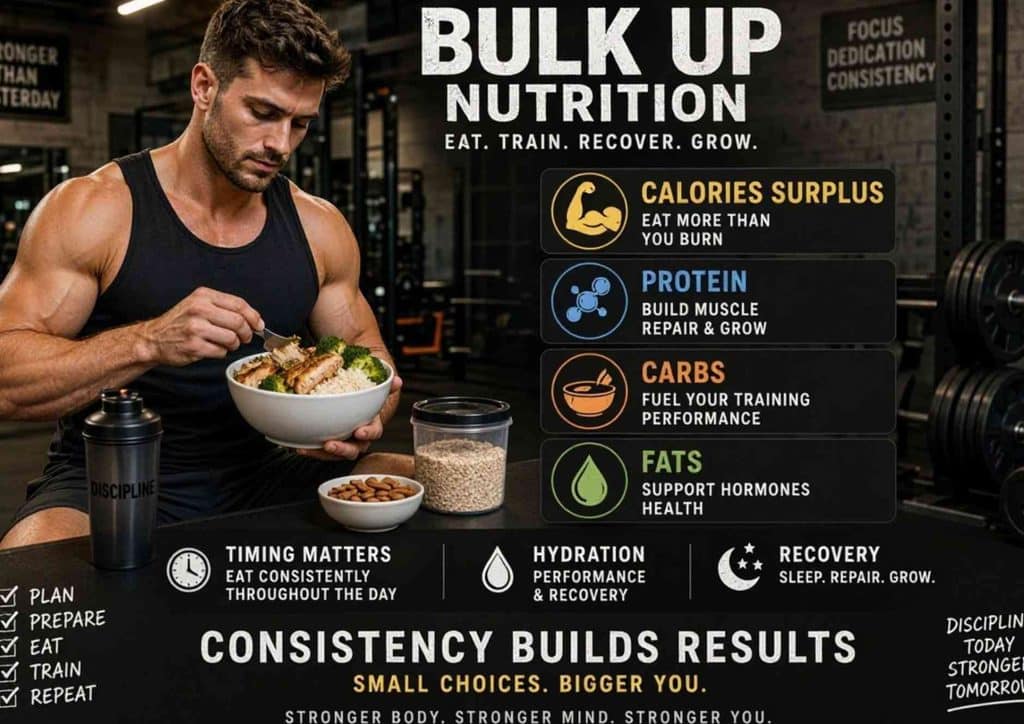
Learning how to bulk up effectively comes down to eating in a modest calorie surplus, consuming enough protein and following a consistent strength training programme. The goal is to give your body enough energy and nutrients to support muscle growth without unnecessarily increasing body fat.
The short version
- Eat in a controlled calorie surplus to support muscle growth. Consuming slightly more calories than your body burns provides the additional energy needed to build muscle without unnecessarily increasing body fat.
- Prioritise protein at every meal to maximise muscle building and recovery. Include quality sources such as chicken, eggs, lean beef, fish, Greek yoghurt and dairy throughout the day.
- Combine structured strength training with consistent nutrition to build muscle effectively. Gradually increase your training demands and monitor your strength, body weight and measurements to assess your progress.
Energy surplus
An energy surplus means consuming more calories than your body uses throughout the day. This provides additional energy to support muscle growth, muscle recovery and tissue repair.

“Muscle growth doesn’t happen by simply eating more food. It happens when you give your body the right fuel, the right training stimulus and the consistency to turn hard work into lasting progress”.
Jake Biggs, Nutrition Longevity

| Bulking Myth | Muscle Growth Reality |
|---|---|
| You need a massive calorie surplus to force rapid muscle growth | Excessively large surpluses lead primarily to fat gain, while a controlled surplus of 200 to 400 calories builds lean tissue efficiently. |
| Dirty bulking with fast food and sweets is the best way to get bigger | Ultra processed junk foods lack the micronutrients and quality protein needed to support heavy lifting, recovery, and optimal health. |
| Eating extreme amounts of protein guarantees faster muscle gains | Protein synthesis caps out around 1.6 to 2.2g per kg of body weight, so extra protein beyond this target provides no added growth. |
| Carbohydrates make you fat and should be kept low when bulking | Carbs replenish muscle glycogen and fuel high intensity workouts, driving the strength gains required to build new muscle. |
| You must eat every two hours or your body will break down muscle tissue | Total daily intake of protein and energy dictates muscle retention and growth, not constant round the clock feeding. |

Personalised bulking up muscle mass gain nutrition calculator
Build lean muscle mass with a nutrition strategy tailored to your calorie surplus, protein intake, and daily food choices. Select your nutrition habits below to generate a clear, high impact muscle gain plan.
Your Personalised Muscle Gain Nutrition Blueprint
Following a requires consistent daily energy, reliable protein distribution, and smart food choices that support muscle growth.
Your tailored nutrition recommendations
Want a personalised muscle gain nutrition plan?
I will review your current eating habits, calorie and protein targets, food preferences, and training schedule to build a practical muscle gain nutrition plan tailored to your routine.
Book a consultationThis interactive calculator provides general sports nutrition guidance for building muscle and is not a substitute for individualised clinical or sports dietetic advice.
“Lifters do not stall because they lack effort; they stall when they guess their nutrition instead of matching what is on their plate to the muscle growth goal ahead. I built this interactive calculator so you can stop second guessing your surplus, protein targets, and daily meals and start turning every week of training into real muscle gains”.
Jake Biggs, Nutrition Longevity

How do you bulk up the right way?
To bulk up effectively, you need to combine sufficient food intake, adequate protein and progressive resistance training. Simply eating more food does not automatically mean you will build more muscle.
Muscle growth occurs when your muscles are exposed to an appropriate training stimulus and have enough energy, protein and recovery time to adapt. Nutrition supports this process, but it cannot replace consistent training.

| Growth Mechanism | Actionable Nutrition Execution |
|---|---|
| Targeted Energy Surplus | Engineers a controlled calorie excess to fuel hard training and muscle hypertrophy without spilling over into excess fat storage. |
| Optimal Protein Distribution | Spreads complete amino acids evenly across your daily meals to keep muscle protein synthesis elevated around the clock. |
| High Density Carbohydrate Fuelling | Saturates muscle glycogen stores, powering maximum workout intensity, heavy lifting performance and rapid session recovery. |
| Progressive Mechanical Tension | Provides the mandatory training stimulus that forces your body to direct extra nutrition strictly toward building dense new tissue. |
| Anabolic Recovery and Sleep | Maximises overnight hormone production and tissue repair so every week of gym effort yields measurable size and strength gains. |
Why is a calorie surplus important?
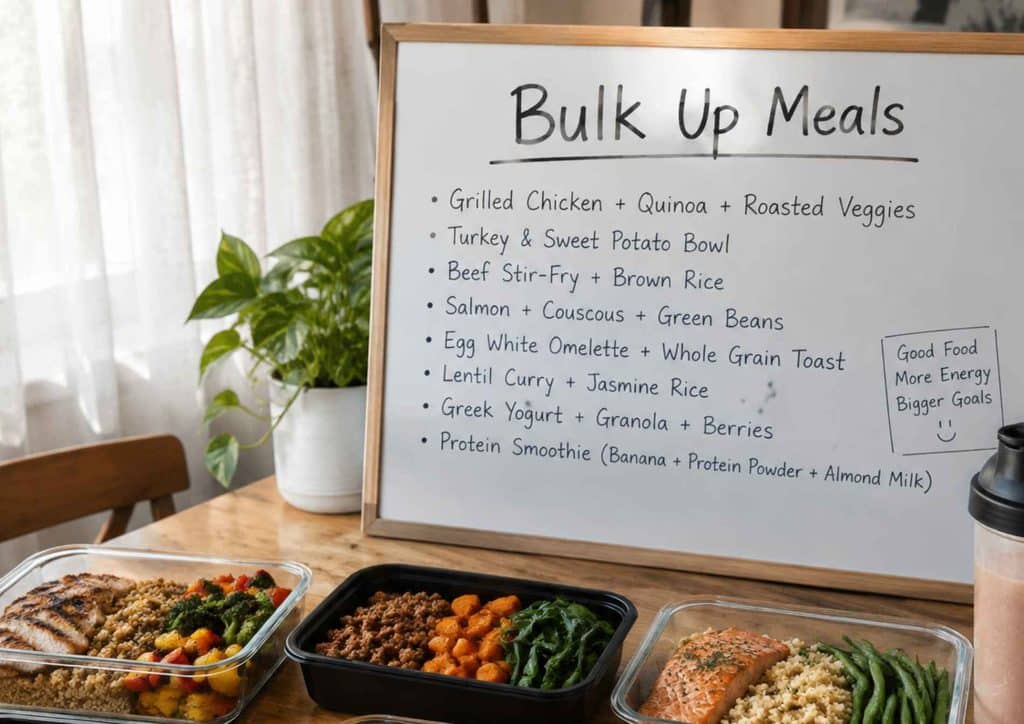
When your goal is to build muscle, eating enough calories is essential. If your energy intake consistently falls below what your body needs, it can become harder to recover from training and support muscle growth.
However, there is an important distinction between eating enough to support muscle development and eating excessively.
A large calorie surplus does not guarantee faster muscle growth. Your body has limitations on how quickly it can build new muscle tissue, so consuming substantially more food than necessary can simply increase fat storage.

| Growth Driver | Muscle Gain Payoff |
|---|---|
| Targeted Energy Surplus | Supplies the vital extra fuel needed to build solid muscle tissue while capping unwanted body fat. |
| Gym Output and Power | Keeps glycogen stores full so you can lift heavier and push maximum effort through every workout. |
| Controlled Growth Limit | Hits your maximum natural rate of muscle building without wasting extra calories on excess fat. |
| Faster Session Recovery | Cuts muscle breakdown and reduces soreness so you bounce back ready for your next heavy session. |

How much protein do you need?
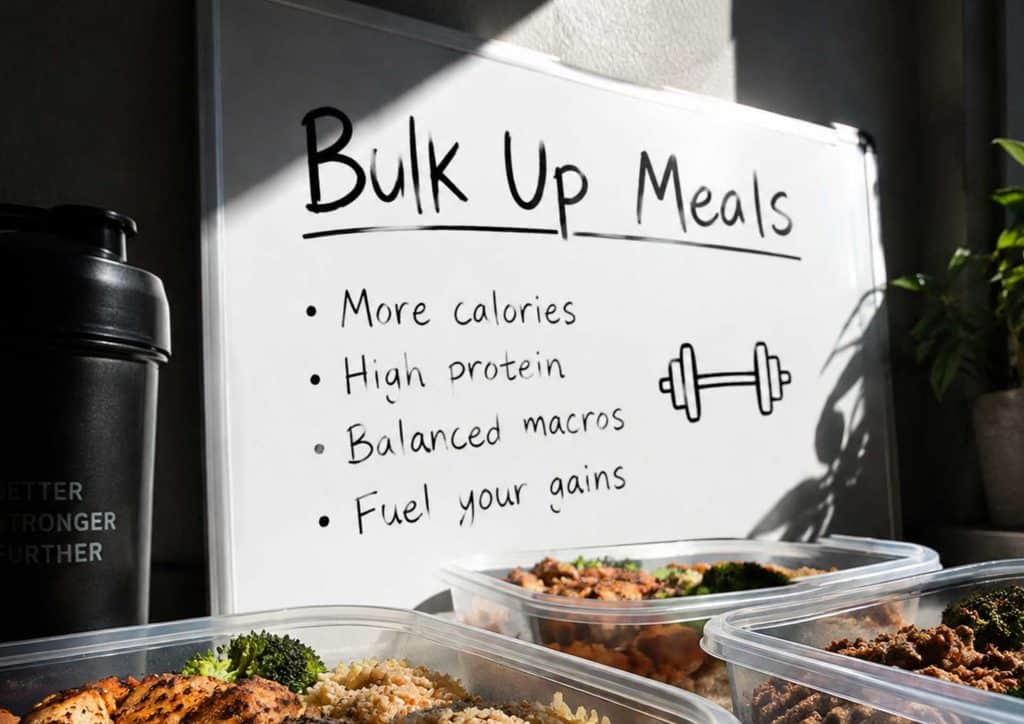
Protein provides the amino acids required to repair and build muscle tissue following resistance training. Understanding how much protein to build muscle can help establish appropriate intake targets when your goal is muscle growth.
Rather than consuming most of your protein in one meal, distribute it across breakfast, lunch, dinner and snacks.
Good protein sources include:
- Chicken breast and lean beef.
- Eggs and egg whites.
- Fish and seafood.
- Milk and other dairy products.
- Tofu, tempeh and legumes.
- Greek yoghurt and cottage cheese
Practical post workout meals can include simple combinations of protein and carbohydrates to support recovery and help meet your daily nutrition targets. Examples include Greek yoghurt with fruit and granola, chicken and rice, eggs on toast, a tuna sandwich, beef and potatoes, protein porridge, or a smoothie made with milk, yoghurt, fruit and protein powder.
| Protein Strategy | Muscle Growth Payoff |
|---|---|
| Optimal Daily Target | Delivers 1.6 to 2.2g per kg of body weight to fully fuel muscle repair and growth after heavy lifting. |
| Even Daily Distribution | Spreads protein across main meals and snacks to keep muscle protein synthesis elevated throughout the day. |
| Complete Animal Proteins | Uses chicken breast, lean beef, eggs, fish and dairy to provide dense leucine and essential amino acids. |
| Quality Plant Proteins | Includes tofu, tempeh and legumes to supply reliable plant based amino acids and support recovery. |

Why is strength training essential?
Strength training provides the stimulus your muscles need to grow. Without an appropriate training stimulus, simply increasing your calorie and protein intake will not produce the same muscle building adaptations.
Focus on progressive overload, which involves gradually increasing the demands placed on your muscles through additional repetitions, resistance, sets or improved exercise technique.
Consistency matters more than constantly changing your programme.

| Training Pillar | Muscle Growth Payoff |
|---|---|
| Mechanical Stimulus | Triggers the essential biological signal that forces your body to turn extra calories and protein into new muscle. |
| Progressive Overload | Steadily increases resistance, reps, or sets over time to guarantee ongoing strength gains and continual growth. |
| Program Consistency | Sticks to a proven routine long enough to master movement mechanics and track measurable muscle mass progress. |
| Targeted Nutrition Support | Pairs hard gym output with adequate energy and protein so every session results in optimal tissue repair. |

How much extra should you eat?
A modest calorie surplus is generally a sensible starting point for muscle gain, with approximately 200 to 300 additional calories per day being a practical initial estimate for many adults.
The exact amount depends on your current energy requirements, training experience, activity levels and individual response.
Starting with a smaller surplus makes it easier to monitor changes in body weight and composition without unnecessarily increasing energy intake.

| Surplus Driver | Muscle Growth Payoff |
|---|---|
| Targeted 200 to 300 Calorie Buffer | Delivers the precise energy extra required to drive muscle hypertrophy while shutting down unwanted body fat storage. |
| Lifting Experience Calibration | Matches energy intake to your training age, allowing newer lifters to capitalise on rapid gains and seasoned lifters to stay lean. |
| Composition and Strength Tracking | Uses weekly scale trends and gym performance data to confirm extra calories are converting straight into lean muscle. |
| Controlled Metabolic Baseline | Establishes a clean eating foundation that prevents digestive overload and keeps long term muscle phases effortless to sustain. |

Why shouldn’t you eat as much as possible?
One of the common misconceptions about bulking is that you need to eat enormous quantities of food to build muscle.
This approach can create several problems. When calorie intake substantially exceeds what your body can use for muscle development, the additional energy can contribute to increased body fat.
You may also find that eating excessive quantities makes you uncomfortable, affects your appetite and makes it harder to maintain a consistent routine.
The objective is not to gain weight as quickly as possible. It is to provide enough energy to support muscle development while keeping unnecessary fat gain in check.

| Overeating Trap | Effect on Muscle and Fat |
|---|---|
| Exceeding Natural Growth Speed | Adds unwanted body fat because your body builds muscle at a set pace and stores extra energy as fat. |
| Heavy Meals and Poor Appetite | Causes bloating, discomfort, and meal fatigue that make consistent eating and hard training much harder. |
| Harsher Fat Loss Later | Forces longer dieting phases later on that can eat into your hard earned muscle and strength. |
| Misleading Scale Jumps | Pushes scale weight up quickly through extra fat stores rather than steady, quality lean muscle. |

How do you calculate your calorie requirements?
Start by estimating how many calories you need to maintain your current body weight.
From there, introduce a modest surplus and monitor your response over several weeks.
Your energy requirements may change as your body weight, muscle mass and training volume increase. This means your initial calorie target should be treated as a starting point rather than a permanent number.

| Calculation Step | Practical Muscle Gain Action |
|---|---|
| Find Maintenance Baseline | Estimate the daily calories needed to hold your current body weight steady across normal weeks. |
| Add a Modest Surplus | Introduce a small extra calorie buffer and track body weight and gym strength over several weeks. |
| Update With Growth | Raise your target when body weight, muscle mass, or training volume climbs and progress slows. |
| Treat Numbers as Flexible | Use your initial calorie target as a starting point and adjust based on real world progress. |

Avoid making large calorie increases
Start with a modest surplus, monitor your progress and only adjust your intake when your longer term trends suggest it is necessary.
A sample meal plan for muscle gain
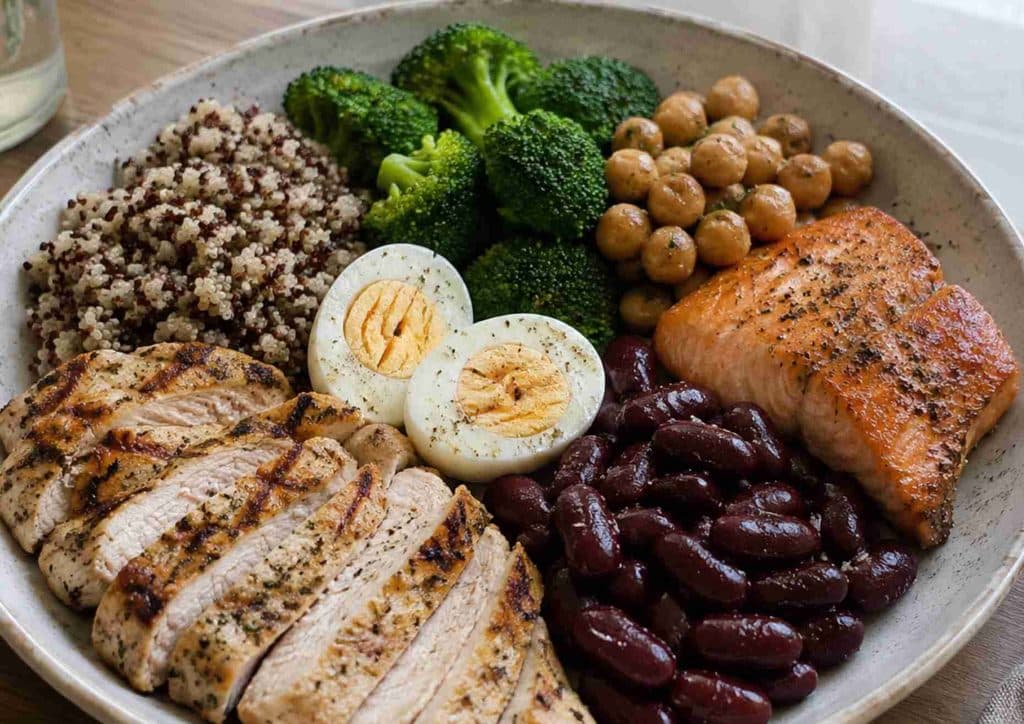
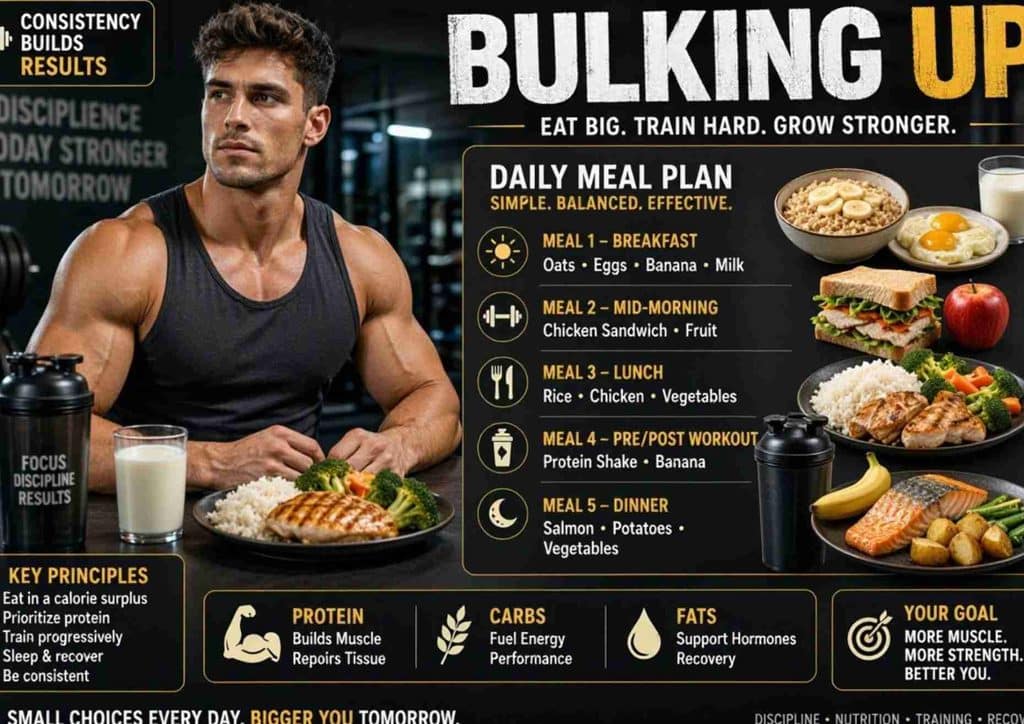
A muscle gain meal plan should provide enough calories, protein, carbohydrates and dietary fats to support training, recovery and overall health.
Carbohydrates are particularly useful because they provide energy for resistance training, while dietary fats support normal physiological functions and help you meet your overall energy requirements.
The following is an example of how you could structure a day of eating.

| Meal | Muscle Mass Growth Role |
|---|---|
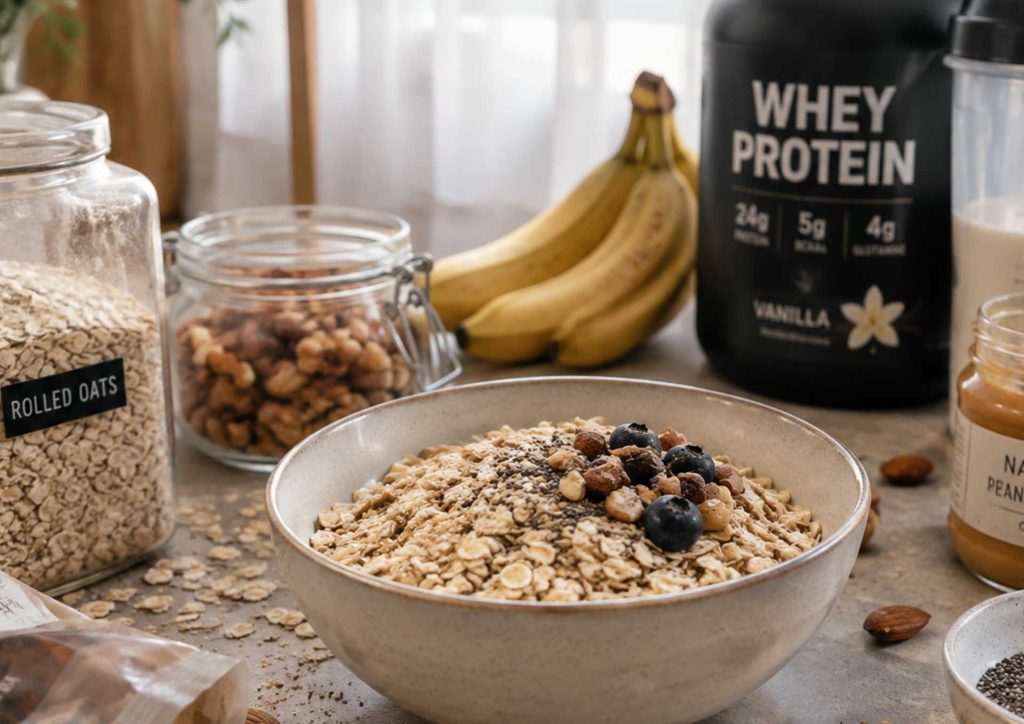
| Breakfast: Rolled oats cooked in milk with Greek yoghurt, blueberries and sliced almonds | Kickstarts morning muscle protein synthesis while supplying slow releasing carbohydrates and dietary fibre for steady energy. |
| Snack: Cottage cheese on wholegrain toast with tomato, or a whey protein shake with a banana | Keeps amino acids flowing between main meals and tops up muscle glycogen stores ahead of lifting. |
| Lunch: Grilled chicken breast or extra firm tofu with brown rice, roasted sweet potato and steamed greens | Delivers complete protein, dense carbohydrates and fibre to sustain afternoon focus, training intensity and recovery. |
| Dinner: Pan seared salmon, lean beef strips or tempeh stir fry with quinoa, leafy greens and olive oil | Provides high quality protein, essential fatty acids and complex fuel to support overnight muscle repair and growth. |
| Evening Snack: Thick plain Greek yoghurt or a glass of milk with a tablespoon of peanut butter | Helps close out daily protein and calorie targets while supporting overnight tissue repair before sleep. |

Why are carbohydrates important for muscle growth?
Carbohydrates are an important part of a muscle building diet because they help provide the energy required for training.
Sources such as rice, oats, potatoes, wholegrain bread, pasta and fruit can help you meet your daily energy requirements. Carbohydrate-rich options like oat bars, fruit, muesli bars, wholegrain sandwiches, and wholegrain wraps make reliable pre workout snacks to top up glycogen stores.
Restricting carbohydrates unnecessarily can make it harder to fuel demanding training sessions, particularly when training volume is high.

| Carbohydrate Role | Muscle Mass Growth Role |
|---|---|
| Training Fuel and Glycogen | Stocks muscle glycogen so you can lift heavier, push closer to failure and sustain hard training output. |
| High Volume Support | Prevents premature fatigue when training volume ramps up, protecting your ability to accumulate productive work. |
| Easy Energy Surplus | Makes reaching your daily calorie target straightforward without relying on heavy, uncomfortable food volumes. |
| Quality Carb Staples | Uses rice, oats, potatoes, wholegrain bread, pasta and fruit to deliver reliable energy and useful micronutrients. |

Should you include dietary fats?
Yes, dietary fats are an essential component of a balanced muscle gain diet.
Foods such as avocado, olive oil, nuts, seeds and oily fish provide dietary fats and other valuable nutrients.
However, remember that dietary fat contains approximately nine calories per gram, compared with four calories per gram from protein and carbohydrates.
This makes it relatively easy to increase your total calorie intake when portions of high fat foods become excessive.
The goal is to include appropriate amounts rather than eliminate dietary fats or consume them without considering your overall energy requirements.

| Fat Strategy | Muscle Mass Growth Role |
|---|---|
| Essential Balanced Inclusion | Supports overall nutrition and keeps meals satisfying rather than stripping fats out of your muscle building plan. |
| High Energy Density Awareness | Accounts for roughly nine calories per gram compared with four from protein and carbohydrates so portions stay controlled. |
| Measured Surplus Management | Prevents large servings of rich foods from blowing out your calorie target and adding unwanted body fat. |
| Nutrient Dense Sources | Uses avocado, olive oil, nuts, seeds and oily fish to supply valuable nutrients alongside your daily energy needs. |

How should you structure your meals?
You do not need to eat six or seven times per day to build muscle.
Some people prefer three larger meals, while others find that three meals and two snacks are easier to manage.
The most important considerations are your overall calorie intake, daily protein consumption and ability to maintain your eating routine consistently.

| Structure Factor | Muscle Mass Growth Role |
|---|---|
| Flexible Meal Count | Removes the pressure to eat six or seven times daily, letting you choose three big meals or three meals plus two snacks. |
| Total Daily Energy First | Prioritises hitting your overall calorie surplus across the day rather than obsessing over rigid meal clock times. |
| Consistent Protein Intake | Keeps daily protein targets front and centre so your body has steady building blocks for tissue growth. |
| Routine Sustainability | Matches your schedule and appetite so you stick to your plan reliably week after week. |

Is it working? How to track a bulk
A successful bulk should be assessed using several indicators rather than relying exclusively on changes in body weight.
The scales can provide useful information, but they cannot distinguish between increases in muscle tissue, body fat, water and digestive contents.
| Tracking Signal | Muscle Mass Growth Role |
|---|---|
| Multi Week Scale Averages | Smooths out daily water, glycogen and food weight swings so you can spot true upward trends over time. |
| Progressive Lifting Performance | Confirms your training output and strength are climbing alongside your calorie surplus and protein intake. |
| Girths and Visual Progress | Helps separate lean tissue growth from excess body fat gain when scale numbers alone tell an incomplete story. |
| Energy and Recovery Quality | Shows whether your daily fuel supports hard sessions and steady recovery without sluggishness or burnout. |

Monitor your body weight
Weigh yourself under consistent conditions, ideally in the morning after using the bathroom and before eating.
Rather than reacting to individual weigh ins, calculate or review your weekly average.
Body weight naturally fluctuates due to hydration, carbohydrate intake, sodium consumption and other factors.
Look for gradual changes over several weeks rather than expecting a predictable increase every day.

| Scale Habit | Muscle Mass Growth Role |
|---|---|
| Morning Baseline Weigh Ins | Standardises conditions after using the bathroom and before eating so your readings stay comparable. |
| Weekly Average Calculation | Smooths out daily shifts from hydration, sodium, carbohydrates and digestion so true trends stand out. |
| Multi Week Progression | Tracks gradual weight movement across several weeks instead of chasing daily scale spikes. |
| Calm Adjustment Timing | Stops premature calorie changes triggered by normal short term water or food weight swings. |
Monitor your strength
Your performance in the gym is another useful indicator.
Keep a training diary and record your exercises, weights, sets and repetitions.
If you are gradually increasing your training performance while recovering adequately, this can be a positive sign that your training and nutrition are supporting your goals.
However, strength improvements do not automatically mean that all weight gained is muscle.

| Performance Signal | Muscle Mass Growth Role |
|---|---|
| Training Diary Records | Tracks exercises, weights, sets and repetitions so you can verify steady progression over time. |
| Strength Plus Recovery | Indicates your nutrition and training load are supporting adaptation without running you down. |
| Neural and Skill Gains | Remains a key factor in early lift jumps, so strength alone does not prove all added weight is muscle. |
| Combined Progress Check | Works best alongside weight trends and body measurements to confirm quality lean tissue growth. |

Use measurements and progress photos
Measurements and progress photos can help provide additional context when assessing changes in body composition.
Consider recording:
- Waist circumference.
- Chest circumference.
- Upper arm circumference.
- Thigh circumference.
- Consistent progress photos.
Take measurements under similar conditions each time. This makes it easier to compare changes over several weeks.

| Assessment Method | Muscle Mass Growth Role |
|---|---|
| Chest, Arm and Thigh Girths | Tracks regional size changes across key muscle groups so you can verify physical growth alongside strength logs. |
| Waist Circumference Checks | Flags whether your calorie surplus is too aggressive and driving unwanted midsection fat accumulation. |
| Consistent Progress Photos | Provides visual context on physique changes over time when scale numbers or tape measures feel subtle. |
| Standardised Measurement Conditions | Keeps tape placement, lighting, posture and timing consistent so comparisons reflect real body composition shifts. |

| Monitoring Metric | Muscle Mass Growth Role | How to Use It |
|---|---|---|
| Body Weight Trends | Tracks weekly average weight shifts so you can spot steady progress without reacting to daily water or digestion swings. | Weigh in first thing in the morning after using the bathroom and compare weekly averages over several weeks. |
| Gym Performance | Shows whether lifting weights, reps and training capacity are climbing to drive ongoing muscle adaptation. | Log exercises, weights, sets and reps in a training diary and look for gradual upward trends over time. |
| Waist Measurement | Helps flag whether extra energy is going toward lean tissue or creeping onto your midsection as excess fat. | Measure waist circumference consistently and compare readings over time to keep surplus calories in check. |
| Progress Photos | Captures visual physique changes over time under matching lighting and poses when scale movement feels subtle. | Take regular photos in consistent lighting, angles and poses and review changes every few weeks. |
| Recovery and Readiness | Reflects daily energy, soreness and workout readiness so you can tell if your fuel and training load are balanced. | Check energy levels, muscle soreness and session readiness between workouts and adjust food or recovery if needed. |

What if your weight is increasing but your waist is growing quickly?
This may mean your calorie surplus is larger than needed, though individual measurements can’t tell you exactly how much muscle or fat you have gained.
Review your average calorie intake, portion sizes and activity levels before making adjustments.
If your weight is increasing without meaningful improvements in training performance, it is also worth reviewing your training programme, sleep and recovery.

| Warning Sign | Muscle Mass Growth Role |
|---|---|
| Rapid Waist Expansion | Points to an oversized calorie surplus that pushes extra energy into fat storage rather than lean tissue growth. |
| Portion and Activity Drift | Helps pinpoint hidden extra calories or lower daily movement so you can dial in a cleaner surplus for muscle gain. |
| Flat Training Performance | Signals that extra weight is not translating into stronger lifts or better training output to drive muscle growth. |
| Programme, Sleep and Recovery Gaps | Protects the training stimulus and recovery environment needed so surplus calories build muscle instead of excess fat. |

When to get a personalised plan
A personalised muscle gain nutrition plan developed by a sports nutritionist can help establish appropriate calorie and protein targets, organise daily meals and account for your individual training demands.
If you’re wondering what is a sports nutritionist, they are a nutrition professional who specialises in using evidence-based nutrition strategies to support muscle growth, athletic performance, recovery and body composition.
Whether you’re looking to build muscle, increase strength or improve your overall physique, working with a sports nutritionist can provide the structure and guidance you need, while understanding how much does a sports nutritionist cost in Sydney can help you choose a service that aligns with your goals and budget.

| Individual Factor | Muscle Mass Growth Role |
|---|---|
| Calorie and Protein Targets | Sets accurate daily energy and protein goals to fuel muscle growth without unnecessary excess body fat. |
| Meal Structure and Appetite | Organises meals around your natural appetite and daily schedule so hitting targets feels practical and consistent. |
| Training Experience and Load | Aligns nutrition and recovery support with your lifting volume, intensity and progression stage. |
| Personalised Adjustments | Adapts targets over time as your body weight, strength and routine shift rather than relying on one size fits all rules. |

How can a muscle gain nutritionist help with healthy bulking?
Working with a muscle gain nutritionist can help you establish a structured approach to increasing your energy intake while supporting muscle development.
This involves looking beyond simply increasing calories. Your current dietary habits, training schedule, protein intake, food preferences and recovery all contribute to the overall plan.

| Coaching Focus | Muscle Mass Growth Role |
|---|---|
| Dietary Habits and Preferences | Shapes a realistic eating routine around your current habits and preferred foods so you stay consistent over time. |
| Calorie and Protein Calibration | Balances a controlled energy surplus with steady daily protein to drive muscle growth and limit excess fat gain. |
| Training Schedule Alignment | Times and sizes meals around your lifting sessions and weekly volume to support strong training output. |
| Recovery and Ongoing Adjustments | Monitors progress, energy and recovery so targets adapt smoothly as your strength and body weight change. |
What does a bodybuilding nutritionist consider?
A bodybuilding nutritionist can help organise nutrition around your training demands, particularly if you follow a structured resistance training programme.
This may involve:
- Establishing individual calorie requirements.
- Calculating appropriate protein intake.
- Distributing carbohydrates around training.
- Balancing dietary fats.
- Developing practical meal structures.
- Monitoring changes in body composition.

| Planning Element | Muscle Mass Growth Role |
|---|---|
| Calorie and Protein Targets | Establishes individual energy and daily protein requirements to drive muscle growth and limit unwanted fat gain. |
| Carbohydrates Around Training | Distributes carbohydrates to fuel resistance sessions, replenish glycogen and support steady workout progression. |
| Balanced Dietary Fats and Meals | Includes sensible fat portions within practical daily meals so your nutrition plan stays balanced and easy to follow. |
| Body Composition Monitoring | Tracks weight trends, training performance and physique changes so targets stay aligned with lean muscle gain. |

When might you need a weight gain nutritionist?
A weight gain nutritionist may be helpful if you consistently struggle to eat enough to support your training and weight gain goals.
This can involve addressing low appetite, irregular eating patterns, food preferences and difficulties meeting daily energy requirements.
The focus should be on improving overall nutritional adequacy rather than simply adding large quantities of high calorie foods.

| Challenge Area | Muscle Mass Growth Role |
|---|---|
| Persistent Low Appetite | Helps you reach your daily calorie and protein targets comfortably when feeling full early holds back progress. |
| Irregular Meal Routines | Creates a steady eating rhythm around busy days and workouts so energy intake stays consistent across the week. |
| Food Preferences and Variety | Builds satisfying meals around foods you enjoy so hitting surplus targets feels practical rather than forced. |
| Overall Nutritional Quality | Prioritises balanced protein, carbohydrates, fats and micronutrients rather than relying on oversized junk food portions. |
When should you avoid bulking without professional advice?
If you have an existing medical condition, take prescription medication, have a history of disordered eating or are experiencing unexplained changes in body weight, seek individual advice before deliberately increasing your calorie intake.
Anyone under 18 should not follow an adult bulking programme. Teenagers have additional nutritional requirements because they are still growing and developing. Their priority should be adequate nutrition to support growth, health and sporting performance, with guidance from their GP or an appropriately qualified nutrition professional.

| Safety Consideration | Muscle Mass Growth Role |
|---|---|
| Medical Conditions and Medications | Ensures calorie surplus changes stay safe and aligned with existing health conditions or prescription treatments before pursuing muscle gain. |
| Disordered Eating History | Protects a healthy relationship with food and body image when structured calorie tracking or weight gain targets could be triggering. |
| Unexplained Weight Shifts | Rules out underlying health issues first so weight changes from a muscle gain plan are clear and safely managed. |
| Under 18 Growth and Development | Prioritises growth, overall health and sport fuelling with GP or qualified nutrition guidance rather than adult bulking rules. |
Red flag: Individual nutritional needs
Speak with your GP or an appropriately qualified nutrition professional before starting a deliberate bulk if you have a medical condition, take medication, have a history of disordered eating or are under 18.
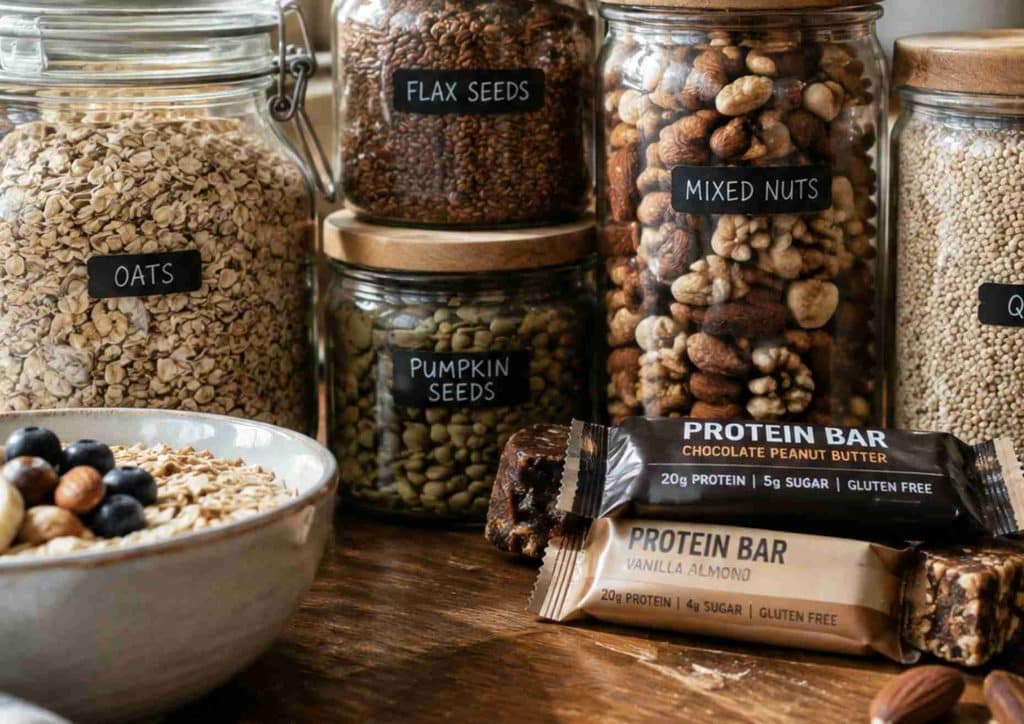
“Building muscle is not about eating as much as possible, it is about consistently providing your body with the energy, protein and training stimulus it needs to adapt”.
Jake Biggs, Nutrition Longevity

What to do this week
- Establish your current maintenance calorie requirements.
- Introduce a modest daily calorie surplus.
- Include adequate protein across your meals.
- Follow progressive resistance training and prioritise recovery.
- Review your weight, strength, measurements and photos over several weeks.

Final thoughts
Learning how to bulk up is about finding the right balance between nutrition, training and recovery.
You do not need an excessively large calorie surplus, complicated meal plans or an unrealistic amount of food to support muscle development.
Start with a modest increase in calories, prioritise protein, include sufficient carbohydrates and dietary fats, and follow a structured strength training programme.
Most importantly, give yourself enough time to assess whether your approach is working. Muscle development is a gradual process, and your nutrition should support something you can maintain consistently.

Frequently asked questions
How long should a bulk last?
There is no fixed duration. It depends on your starting point, training experience, goals and how your body responds. Review your progress regularly rather than following an arbitrary deadline.
Can I bulk without protein powder?
Absolutely. You can meet your protein requirements through everyday foods such as chicken, eggs, fish, Greek yoghurt, milk, lean beef, tofu and legumes.
What if I struggle to eat enough?
Try eating more frequently, choosing energy dense nutritious foods and incorporating smoothies or milk based drinks. Smaller, more frequent meals can make it easier to increase your intake.
Should teenagers bulk?
Teenagers should not follow deliberate adult bulking programmes. Their priority should be adequate nutrition to support growth, development, health and sporting performance, with guidance from their GP or a qualified nutrition professional.

Keep reading
This article is general information, not personal medical or nutritional advice. Individual needs vary. For guidance tailored to you, book a consultation.
Book a 60 minute consultation, in Bondi Junction or by Telehealth from anywhere in the world.