

The quick answer
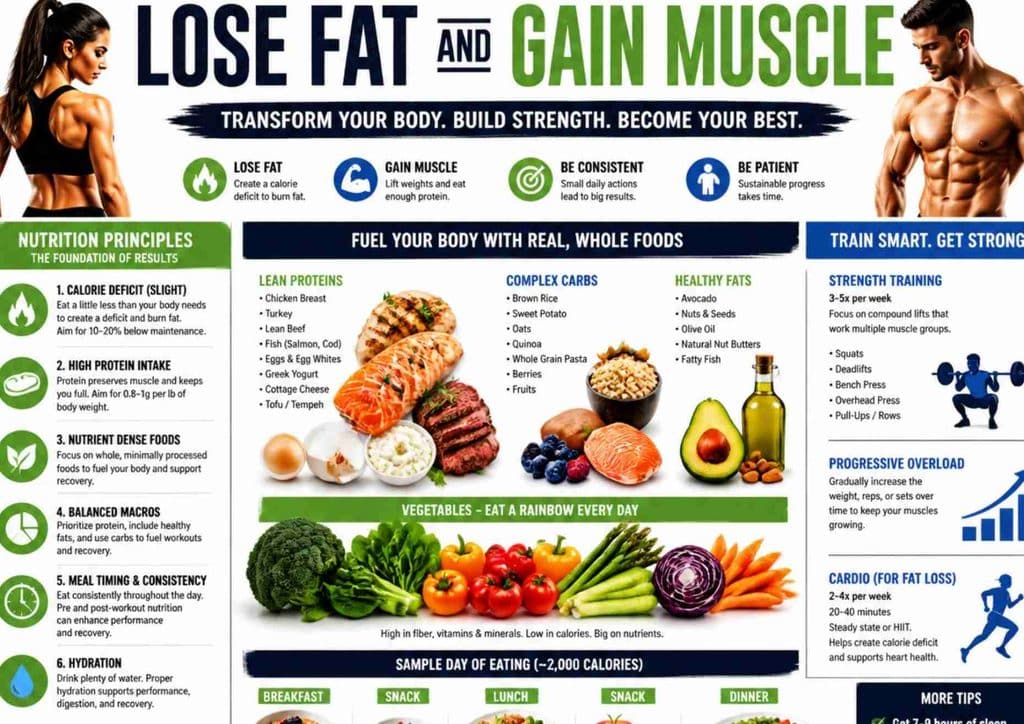
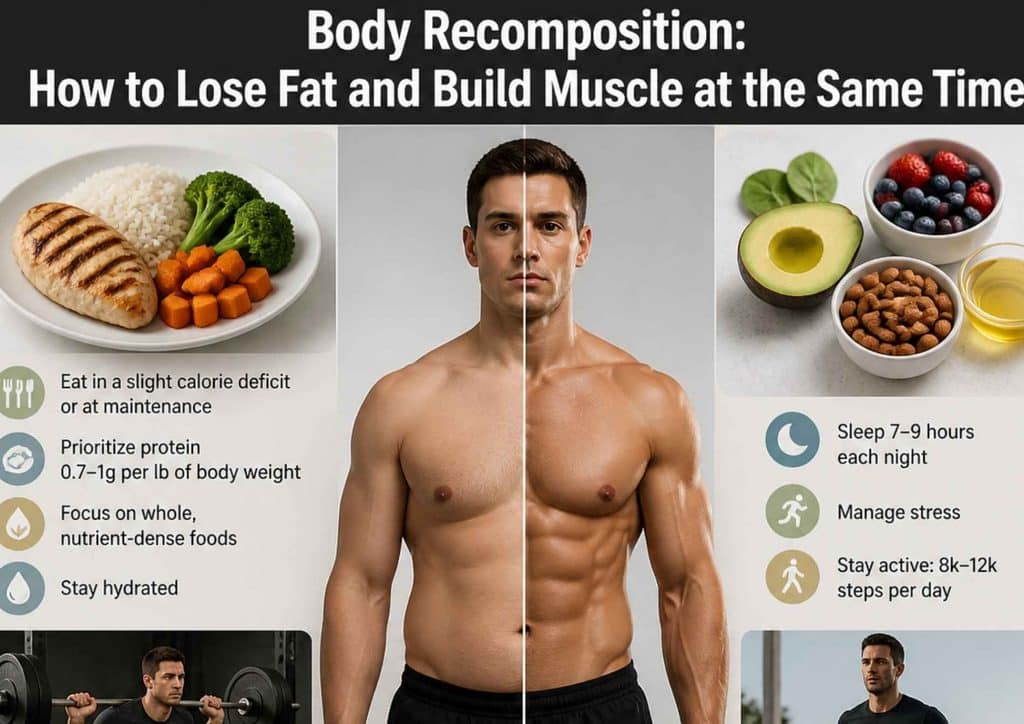
Yes, body recomposition allows you to lose body fat and build muscle at the same time. This process requires consistent strength training, adequate protein, enough energy to support muscle growth and a modest energy deficit where appropriate. It is gradual, so focus on changes in strength, body measurements and how your clothes fit rather than expecting rapid changes on the scales.
The short version
- Prioritise strength training to build and preserve muscle while losing body fat. Focus on progressive overload by gradually increasing weights, repetitions or training intensity to give your muscles a consistent stimulus to grow.
- Eat enough protein from high quality protein foods to support muscle repair, recovery and growth while maintaining a balanced intake of carbohydrates. Protein provides the building blocks for muscle development, while carbohydrates fuel demanding workouts and help you maintain training performance.
- Measure progress through strength improvements, body measurements and progress photos rather than relying on the scales alone. You can lose body fat and build muscle without seeing a significant change in body weight, so look for improvements in muscle definition, body composition and physical performance.
Body recomposition
The process of reducing body fat while increasing or maintaining muscle mass. It involves combining resistance training with appropriate nutrition to gradually change your body composition.

| Focus Strategy | Action Plan | Impact on Results |
|---|---|---|
| Resistance Stimulus | Focus on structured weightlifting. Drive steady progression by incrementally adding load, reps, or set volume over time. | Triggers hypertrophy and protects lean mass against breakdown during weight management phases. |
| Targeted Nutrition | Consume sufficient high-quality protein to drive recovery, paired with complex carbs to power training sessions. | Amino acids fuel tissue repair, while glycogen supports high-intensity gym performance. |
| Caloric Calibration | Target a slight energy deficit or maintenance level that feeds lean tissue expansion while reducing fat stores. | Prevents energy crashes and metabolic adaptation, making physique improvements sustainable. |
| Multi-Metric Tracking | Monitor progress through body circumferences, photo logs, and gym strength gains rather than weight scale numbers. | Captures changes in body shape and density that regular scale weight often obscures. |

“Body recomposition is about changing what your body is made of, not just what it weighs. Build muscle, lose body fat and measure success through strength, performance and how your body changes over time”.
Jake Biggs, Nutrition Longevity

| Topic Area | Common Myth | Evidence-Based Fact | Practical Takeaway |
|---|---|---|---|
| Body Recomposition Feasibility | Losing fat and gaining muscle simultaneously is physically impossible for anyone past their first month of training. | Simultaneous fat loss and muscle gain (body recomposition) is well-documented in beginner and intermediate lifters, individuals returning from a break, and those carrying higher body fat percentages. | Focus on a structured training and nutrition strategy rather than assuming you must choose between an extreme bulking or cutting phase. |
| Caloric Balance Strategy | You need an aggressive caloric deficit to drop body fat quickly while building lean muscle. | Severe energy deficits elevate cortisol, reduce muscle protein synthesis rates, and compromise recovery, impairing your body’s ability to synthesise new lean tissue. | Aim for a slight to moderate deficit of around 10 to 20 percent below maintenance calories to fuel muscle growth while stripping fat stores. |
| Daily Protein Requirements | Standard protein intakes are sufficient for recomposition as long as total calories remain low. | Higher dietary protein intake protects existing muscle tissue during energy deficits while supplying essential amino acids needed for lean tissue growth. | Target 1.6 to 2.2 grams of protein per kilogram of total body mass daily, evenly spread across three to five meals. |
| Resistance Training Stimulus | High-repetition, low-weight cardio-style lifting is mandatory to burn local fat and tone muscles. | Mechanical tension and progressive overload are the primary drivers of muscle growth; lighter weights with high repetitions do not provide superior fat burning. | Prioritise compound strength training three to five times per week, focusing on lifting heavier over time with sound technique. |
| Cardio Integration | Hours of daily steady-state cardio are required alongside weight training to achieve a lean, muscle-dense physique. | Excessive cardiovascular volume can create an interference effect, impairing strength gains and increasing systemic fatigue without providing additional benefit for fat loss. | Use cardio as a secondary tool for metabolic health and energy expenditure, capping moderate sessions at two to three times weekly. |
| Sleep & Recovery Cycles | Fat loss and muscle gain depend exclusively on diet and exercise consistency inside the gym. | Inadequate sleep drastically impairs insulin sensitivity, disrupts growth hormone secretion, and reduces muscle protein synthesis efficiency. | Prioritise seven to nine hours of quality sleep per night to support recovery, hormonal balance, and body composition changes. |

How to lose body fat and building muscle together calculator
Discover practical, evidence-based strategies to lose body fat and build muscle simultaneously. Complete your profile below to receive tailored guidance for optimal body composition outcomes.
Your Body Recomposition Diagnostic Summary
Your profile indicates that requires careful optimisation for successful simultaneous fat loss and muscle gain.
Your tailored body recomposition recommendations
Need a structured, professional clinical nutrition programme?
I will review your personal body composition goals and formulate an evidence-based strategy designed to support metabolic health and athletic performance safely.
Book a consultationThis interactive tool provides educational guidance to support healthy nutrition habits and is not a substitute for professional clinical advice.

“I built this interactive calculator to cut through the noise and conflicting myths surrounding body recomposition. Simultaneous fat loss and muscle growth is entirely achievable when underpinned by evidence-based nutrition, but standard single-focus approaches often fall short. By assessing key factors such as your training experience, energy intake, protein targets, and recovery habits, this tool pinpoints your primary performance hurdle and delivers tailored, actionable guidance to help you achieve sustainable results safely”.
Jake Biggs, Nutrition Longevity

Can you lose fat and build muscle at the same time?
Yes, it is possible to lose fat and build muscle simultaneously, but the process depends on your training experience, starting body composition, nutrition and recovery.
Traditionally, people approach fat loss and muscle gain as two separate goals. They spend months eating less to lose fat, followed by months eating more to increase muscle. However, you do not always need to separate these goals.
This approach takes a more balanced direction. Instead of focusing exclusively on losing weight, the aim is to reduce body fat while giving your muscles the nutrition and training stimulus they need to develop.

| Starting Profile | Recomposition Potential | Core Nutritional Focus | Your Expected Result |
|---|---|---|---|
| Beginners & New Lifters | Highest efficiency due to heightened muscular sensitivity to novel training stimuli. | Slight energy deficit or maintenance calories paired with 1.6–2.2g/kg protein daily | Rapid strength increases, steady fat loss, and noticeable muscle growth within early months. |
| Returning After a Break | High efficiency supported by muscle memory and established neuromuscular pathways. | Moderate energy deficit with high protein distribution across three to five daily meals | Quick restoration of previous muscle mass alongside rapid reduction in body fat levels. |
| Higher Body Fat Levels | High efficiency as stored body fat provides plentiful energy to fuel muscle building. | Controlled 15–20% caloric deficit, high dietary protein, and structured strength sessions | Consistent fat reduction while simultaneously preserving and developing lean muscle tissue. |
| Advanced & Trained Athletes | Moderate efficiency requiring precise calorie, protein, and training programming. | Very subtle energy deficit (5–10%), strict macro timing, and intense progressive overload | Gradual physical refinement, targeted stubborn fat loss, and incremental lean gains. |

What actually makes this work?
There are three important components.
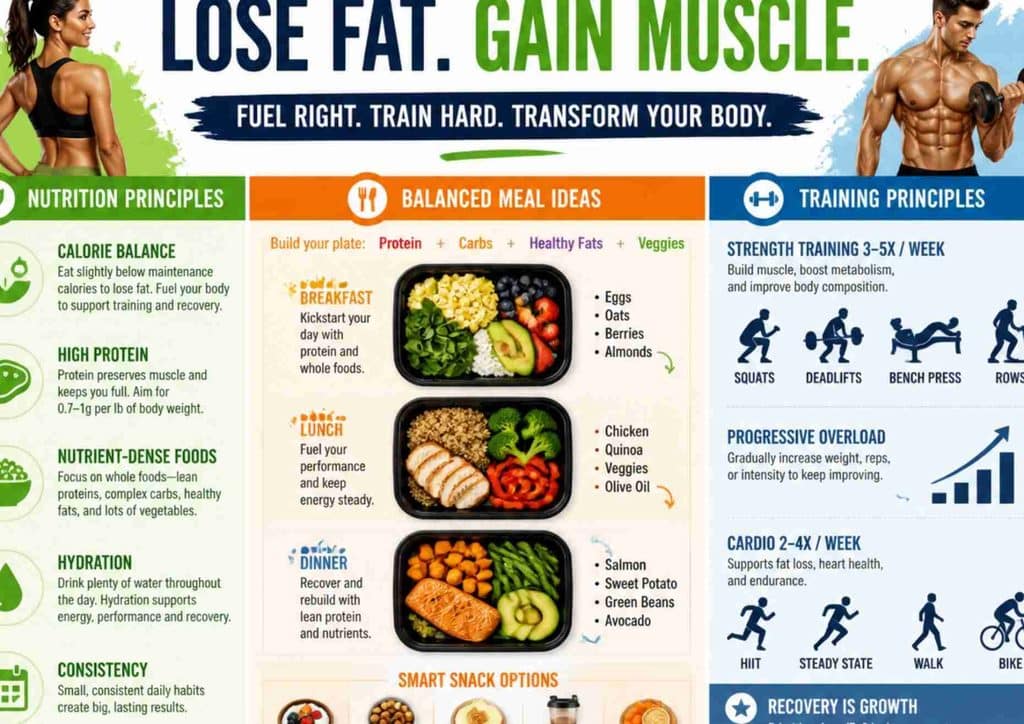
Strength training provides the stimulus your muscles need to adapt and grow. Without progressive resistance training, simply eating more protein will not provide the same muscle building stimulus.
Protein supplies the amino acids required for muscle repair and growth. Eating enough throughout the day helps support your training and recovery.
Energy intake needs to be appropriate for your goals. A modest calorie deficit can support fat loss, but an overly restrictive diet can compromise training performance, recovery and muscle development.
The important distinction is that eating less is not automatically better. You need enough food to train effectively and recover between sessions.
| Key Component | Physiological Role | Optimal Approach | Body Composition Impact |
|---|---|---|---|
| Progressive Resistance Stimulus | Forces muscle tissue to adapt, repair, and grow by applying mechanical tension over time. | Structured compound lifting three to five times weekly with progressive overload | Triggers muscle protein synthesis, preventing lean tissue loss during fat reduction. |
| Dietary Protein Availability | Supplies the essential amino acid building blocks required to reconstruct and repair active muscle fibres. | Target 1.6 to 2.2 grams of protein per kilogram of body mass daily, evenly distributed | Accelerates muscular recovery, reduces tissue degradation, and enhances overall metabolic rate. |
| Caloric Balance & Energy Fuel | Provides the daily energy required to sustain intensive training whilst encouraging fat oxidation. | Slight to moderate deficit of 10 to 20 percent below maintenance energy requirements | Promotes steady fat loss without compromising workload capacity, hormonal balance, or growth. |

Who does this approach suit?
This approach tends to suit beginners, people returning to exercise after a break and people who have more body fat to lose.
Your starting point matters because your training history, current muscle mass and nutritional intake all influence how your body responds.
| Candidate Category | Physiological Advantage | Strategic Focus | Recomposition Outlook |
|---|---|---|---|
| Resistance Training Novices | High neural responsiveness to new muscular stimuli allows rapid structural adaptation and lean growth. | Establish consistent strength training habits paired with a balanced, high-protein nutrition plan. | Exceptional capacity to gain noticeable muscle mass whilst steadily decreasing overall body fat percentage. |
| Lapsed Exercisers & Lifters | Pre-existing neuromuscular pathways and muscle memory facilitate rapid regaining of former physical condition. | Reintroduce progressive overload safely whilst managing recovery and supporting protein synthesis. | Rapid restoration of previous lean tissue alongside accelerated body fat reduction. |
| Individuals with Elevated Body Fat | Ample stored adipose tissue provides ready endogenous energy to fuel ongoing muscle construction. | Implement a moderate energy deficit alongside regular compound resistance sessions. | Substantial, consistent fat loss combined with steady preservation and development of muscle. |

Beginners starting strength training
If you are relatively new to resistance training, your muscles are experiencing a new training stimulus. This can create an opportunity to build muscle while gradually reducing body fat.
You do not need an advanced training programme to get started. Consistent resistance training, appropriate nutrition and gradual increases in training difficulty provide a strong foundation.

| Training Phase | Physiological Mechanism | Fundamental Action | Expected Outcome |
|---|---|---|---|
| Initial Adaptation Phase | Novel mechanical stress stimulates high rates of muscle protein synthesis, opening a prime window for early growth. | Focus on mastering core compound movements with proper form three times per week. | Rapid neuromuscular adaptations and early strength gains without overwhelming recovery. |
| Nutritional Alignment | Adequate amino acid intake supports tissue construction while a small calorie deficit encourages fat breakdown. | Maintain a slight energy deficit paired with 1.6 to 2.2g of protein per kilogram of body weight daily. | Steady reduction in body fat stores alongside simultaneous development of lean tissue. |
| Progressive Overload | Gradually increasing load, repetitions, or set quality ensures continuous muscular development over time. | Apply small, incremental weight increases once target repetition ranges are comfortably completed. | Sustained long-term body recomposition without needing overly complex training routines. |

People returning to exercise
If you have previously trained consistently but taken an extended break, returning to structured strength training can help you rebuild muscle and improve your fitness.
Your previous training experience may influence how quickly you regain strength and muscle, although individual responses vary.

| Return Phase | Physiological Response | Core Training Strategy | Expected Progression |
|---|---|---|---|
| Re-entry & Reactivation | Myonuclear retention and established neural pathways allow rapid muscular reactivation upon training resumption. | Reintroduce structured compound lifting at moderate intensity to rebuild volume tolerance safely. | Quick restoration of baseline motor control and movement efficiency within early weeks. |
| Nutritional Realignment | Prioritising protein intake during retraining ensures amino acids fuel rapid muscular reconstruction and fat oxidation. | Combine a moderate energy deficit with consistent daily protein distribution across three to five meals. | Accelerated loss of gained body fat paired with swift rebuilding of prior muscle volume. |
| Strength Regain & Adaptation | Enhanced protein synthesis rates in previously trained tissue facilitate efficient muscle memory responses. | Progressively scale resistance and workload volume as recovery capacity and joint stability improve. | Rapid return to former strength levels and improved body composition profiles. |
People with more body fat to lose
People carrying more body fat may be able to support muscle development while gradually reducing their overall fat stores.
Rather than immediately following an aggressive weight loss diet, a more moderate approach can help preserve muscle and maintain training performance.

| Strategic Focus | Physiological Mechanism | Practical Implementation | Expected Body Response |
|---|---|---|---|
| Endogenous Energy Utilisation | Stored adipose tissue provides abundant endogenous energy to fuel ongoing muscle construction during a calorie deficit. | Maintain a controlled 15 to 20 percent energy deficit rather than severe dietary restriction. | Steady, continuous fat loss without compromising energy levels or metabolic function. |
| Lean Tissue Preservation | Adequate dietary protein and resistance training signal the body to retain muscle whilst mobilising fat stores. | Consume 1.6 to 2.2g of protein per kilogram of body mass daily alongside structured lifting. | Protection of active muscle mass and prevention of metabolic slowdown during weight reduction. |
| Sustained Training Performance | Moderate nutritional planning ensures sufficient glycogen availability for high-quality resistance workouts. | Fuel pre-workout sessions with light carbohydrates and maintain consistent sleep hygiene. | Consistently high workout output, improved strength metrics, and long-term adherence. |

Who might need a different approach?
If you are already relatively lean, highly experienced with strength training or approaching a specific sporting competition, simultaneously reducing fat and increasing muscle can become more challenging.
Working with a muscle gain nutritionist can help determine whether your current priority should be muscle development, fat loss or maintaining your existing body composition.

| Athlete Category | Physiological Constraint | Recommended Focus | Clinical Outcome |
|---|---|---|---|
| Advanced & Seasoned Lifters | Proximity to genetic muscular potential narrows the physiological window for concurrent fat loss and muscle hypertrophy. | Implement dedicated, periodised phases alternating between focused hypercaloric muscle growth and controlled energy deficits. | Sustained long-term muscular development without wasting months in stagnant maintenance plateaus. |
| Already Lean Individuals | Low baseline body fat reduces available endogenous energy, increasing the risk of muscle tissue degradation in deficits. | Prioritise a slight energy surplus or maintenance calories to safeguard hormonal health and fuel lean tissue addition. | Optimised metabolic function, improved strength progression, and preservation of existing lean mass. |
| Sport-Specific & Weight-Class Competitors | Fixed competition deadlines demand rapid body composition shifts or strict peak power output targets. | Seek tailored clinical guidance from a sports nutritionist to align macro intake with specific athletic event demands. | Clear strategic prioritisation ensuring maximum competitive performance and precise body composition control. |

How to eat to lose fat and build muscle
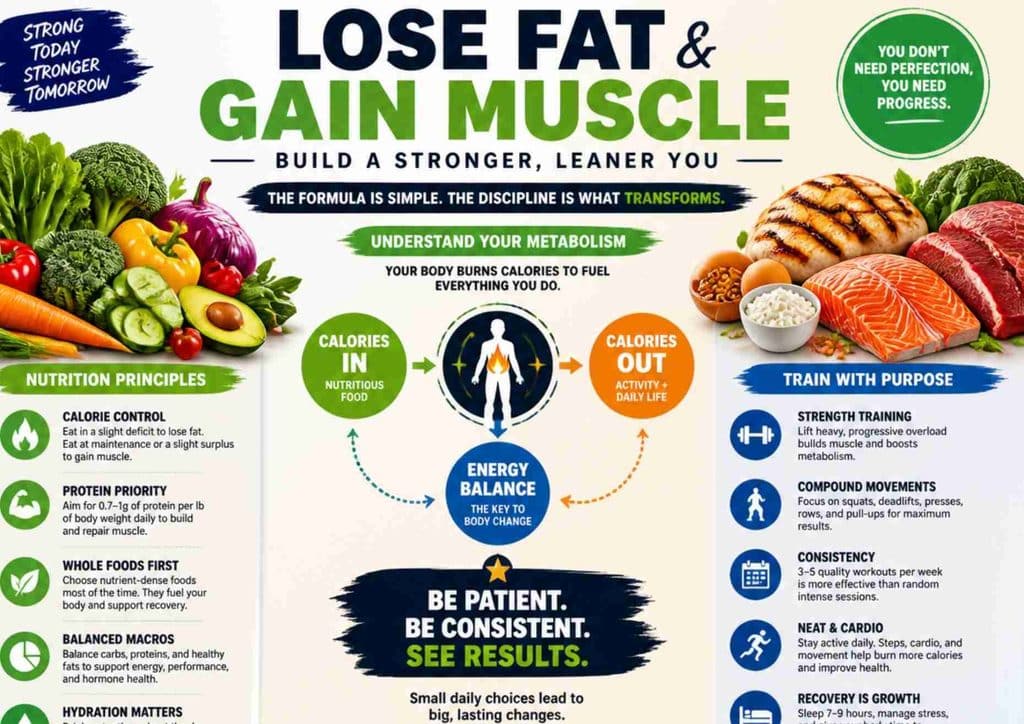
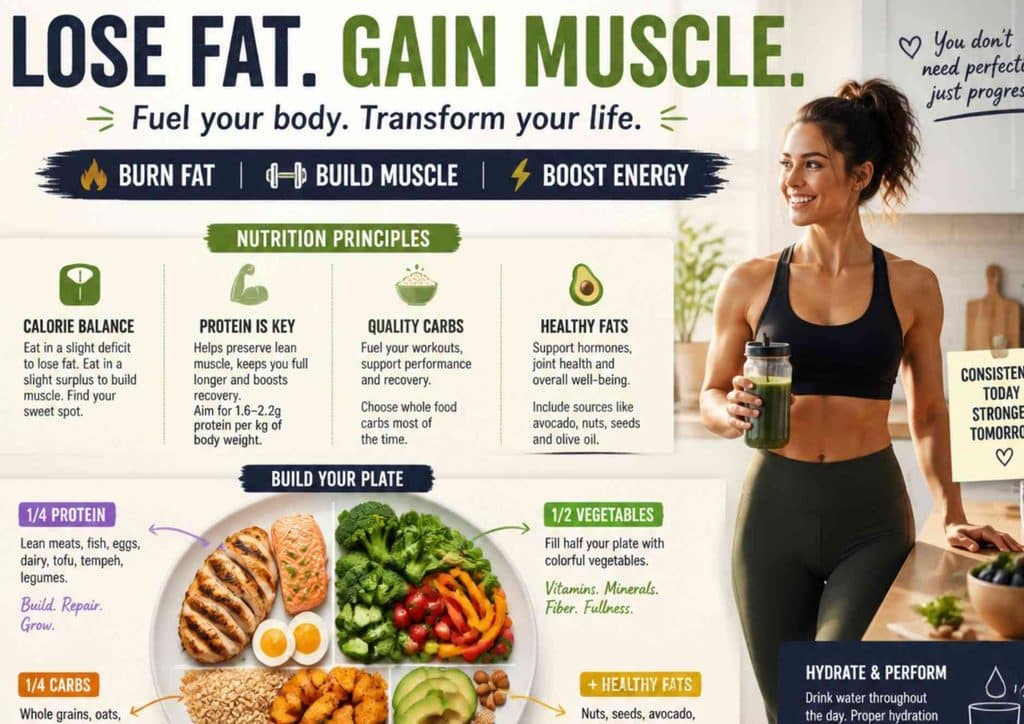
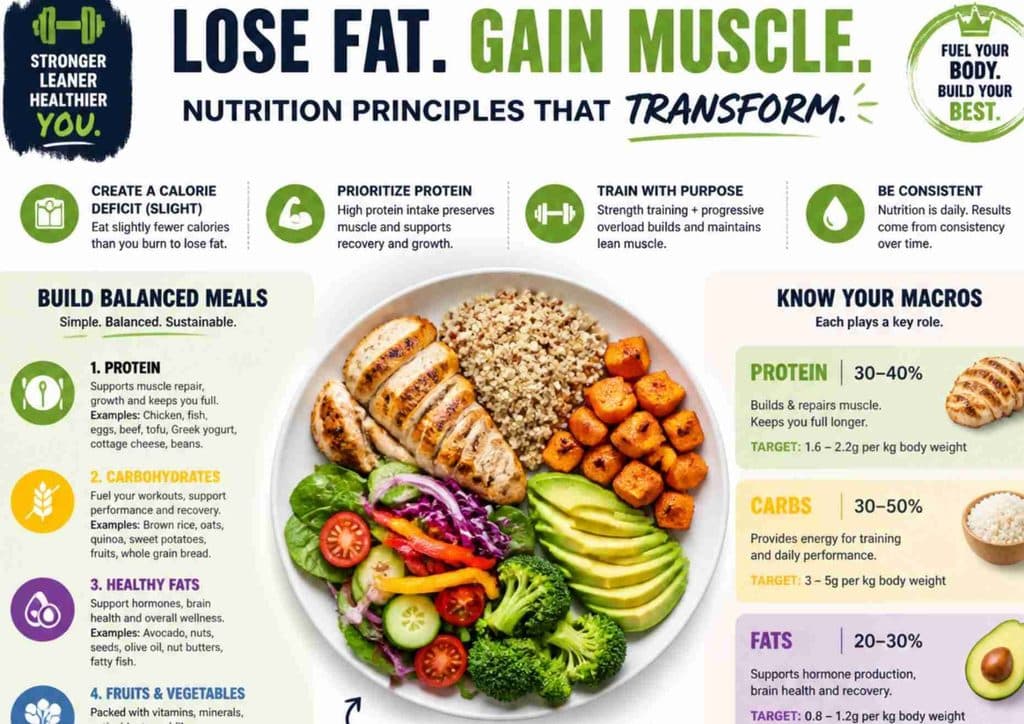
Eating to improve your body composition means following a balanced diet for weight loss, consuming enough protein, choosing nutritious foods, managing your overall energy intake and providing your body with sufficient fuel for training.
You do not need complicated meal plans, restrictive food rules or an unnecessarily long list of foods to avoid.

| Nutritional Pillar | Core Objective | Practical Implementation | Metabolic Outcome |
|---|---|---|---|
| Adequate Protein Intake | Supplies essential amino acids required to repair, rebuild, and grow lean muscle tissue during an energy deficit. | Consume 1.6 to 2.2 grams of protein per kilogram of body mass daily across balanced meals. | Preserves active muscle mass, enhances satiety, and elevates thermic effect of feeding. |
| Controlled Energy Balance | Maintains a slight caloric deficit to encourage fat mobilisation without compromising recovery or hormone health. | Target a modest 10 to 20 percent energy deficit below your total daily maintenance requirements. | Sustains steady adipose tissue loss whilst providing sufficient fuel for progressive training. |
| Flexible, Whole Food Nutrition | Prioritises nutrient density and digestive comfort without relying on restrictive rules or complex meal plans. | Focus on quality carbohydrates, lean proteins, healthy fats, and adequate hydration daily. | Supports long-term dietary adherence, optimal energy levels, and overall vitality. |

Prioritise protein at every meal
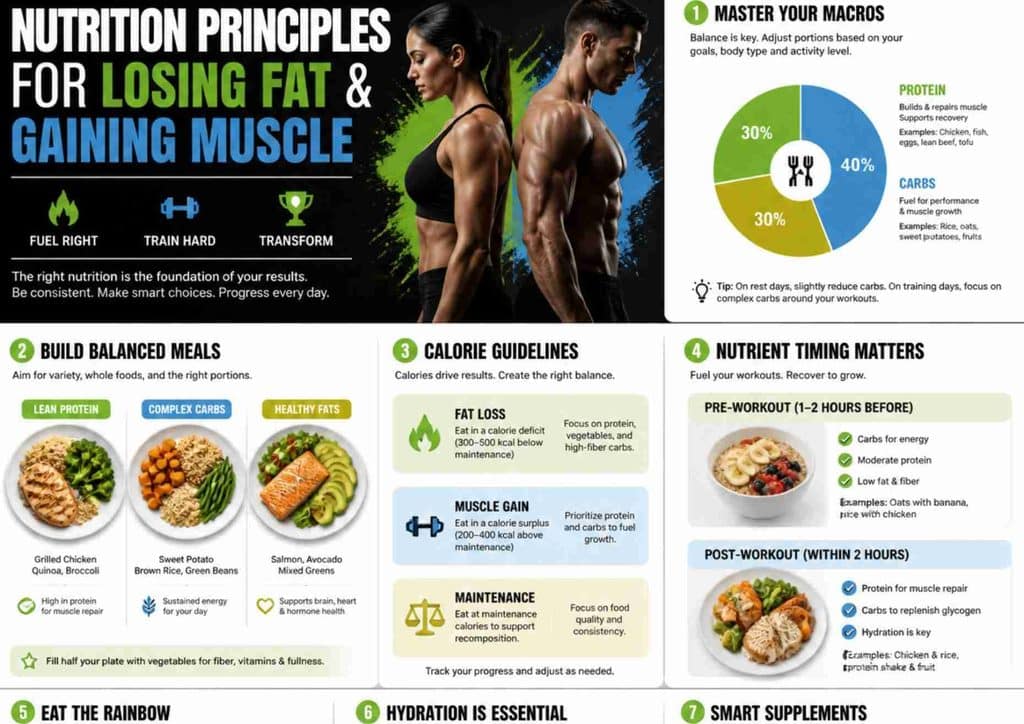
Protein is essential for muscle repair and growth, particularly when you are following a consistent strength training programme.
Include a quality protein source with breakfast, lunch and dinner, rather than trying to consume most of your daily protein in one meal.
Examples of high protein foods include:
- Chicken breast and lean beef.
- Fish, salmon and tuna.
- Eggs and Greek yoghurt.
- Cottage cheese and milk.
- Tofu, tempeh and legumes.
- Whey protein when convenient.
The amount you need depends on your body weight, training demands, overall energy intake and individual circumstances.

| Meal Window | Primary Protein Source | Sample Meal Idea | Recomposition Benefit |
|---|---|---|---|
| Breakfast | Eggs, Greek yoghurt, or cottage cheese | Poached eggs on sourdough with spinach, or high-protein Greek yoghurt topped with berries and seeds | Kicks off muscle protein synthesis early and improves morning satiety to prevent mid-day cravings. |
| Lunch | Chicken breast, tuna, or tofu | Grilled chicken breast salad bowl with quinoa, avocado, and mixed greens, or a tofu and vegetable stir-fry | Provides sustained amino acid delivery throughout the afternoon to protect lean tissue during energy deficits. |
| Pre/Post-Workout Snack | Whey protein, tempeh, or dairy options | Whey protein shake blended with a ripe banana, or cottage cheese on rice cakes with a pinch of cinnamon | Delivers fast-digesting amino acids and simple carbohydrates to fuel workout performance and recovery. |
| Dinner | Lean beef, salmon, or legumes | Baked salmon fillet or lean beef mince with roasted sweet potato, steamed broccoli, and extra virgin olive oil | Supplies essential fatty acids and micronutrients alongside high-quality protein for overnight muscle repair. |

Do not cut carbohydrates too low
Carbohydrates are an important fuel source for resistance training and other forms of exercise.
Reducing carbohydrates excessively can make it harder to maintain training intensity, particularly during demanding workouts.
Include foods such as oats, brown rice, wholemeal pasta, sweet potato, fruit and legumes.

| Carbohydrate Source | Physiological Role | Practical Application | Training & Recovery Impact |
|---|---|---|---|
| Wholegrain Cereals & Oats | Provides sustained release energy to maintain glycogen reserves across daily activities and standard routines. | Incorporate oats or wholegrain bread into breakfast or lunch meals. | Ensures stable blood glucose levels and prevents premature fatigue during workouts. |
| Starchy Tubers & Root Vegetables | Supplies dense complex carbohydrates essential for replenishing muscle glycogen following intensive exertion. | Pair baked potatoes or sweet potatoes with evening protein meals. | Supports optimal muscular recovery, glycogen storage, and overnight recuperation. |
| Fresh Fruit & Legumes | Delivers quick-acting carbohydrates alongside vital micronutrients, minerals, and dietary fibre. | Consume pieces of fruit pre-workout or add lentils and beans to lunch and dinner salads. | Enhances digestive health, boosts workout output, and maintains high training intensity without sluggishness. |

Include carbohydrates around your workouts
Eating carbohydrates before training, including appropriate pre workout snacks, can help provide energy for your session. While including them in your post training meal helps replenish energy stores.
For example, you could have oats and fruit before a morning workout or rice with chicken and vegetables after an afternoon session.
The amount and timing should reflect your training schedule, appetite and digestive comfort.

| Nutritional Window | Physiological Goal | Suggested Combinations | Recomposition Benefit |
|---|---|---|---|
| Pre-Training Phase | Elevates circulating blood glucose to fuel high-intensity lifting sets and sustain workout output. | Rolled oats with fresh berries, sourdough toast with honey, or a banana | Sustains high muscular effort, prevents early neural fatigue, and protects lean muscle tissue. |
| Post-Training Phase | Replenishes depleted glycogen stores and drives amino acids into recovering muscle cells. | White or brown rice with lean chicken breast, or roasted sweet potatoes with white fish | Accelerates muscular repair, minimises post-exercise soreness, and reinstates glycogen reserves. |
| Individual Calibration | Matches total carbohydrate volume directly to session length, exercise load, and gut tolerance. | Adjust portion sizes upwards for high-volume sessions and downwards on rest days | Avoids unwanted gastrointestinal distress while maintaining optimal daily fuel intake. |

Keep your calorie deficit modest
If reducing body fat is a priority, a modest energy deficit can help you achieve this without unnecessarily compromising muscle development, which is an important part of sustainable weight loss.
However, you do not need to force a calorie deficit if you are already eating appropriately and making progress through training.
This is where individual weight loss support can be valuable, particularly if you have previously followed restrictive diets or struggled with inconsistent eating habits.

| Strategy Component | Core Objective | Practical Application | Recomposition Outcome |
|---|---|---|---|
| Moderate Energy Reduction | Prevents severe metabolic slowdown and protects lean tissue by avoiding aggressive, overly restrictive diets. | Aim for a controlled 10 to 20 percent deficit below estimated total daily energy expenditure. | Sustains consistent fat mobilisation whilst retaining sufficient energy for heavy lifting. |
| Contextual Calibration | Acknowledges that fixed caloric deficits are unnecessary when body composition and strength progress naturally. | Monitor strength metrics and body measurements before making arbitrary dietary reductions. | Prevents burnout and supports long-term adherence without unnecessary caloric restriction. |
| Individualised Support | Navigates historical dieting patterns, emotional eating, or erratic habits with professional guidance. | Collaborate with an experienced nutritionist to tailor targets to your specific lifestyle history. | Builds a sustainable, positive relationship with food and ensures steady, stress-free progress. |

What should a typical day of eating look like?
A balanced approach could look something like this:
- Breakfast: Greek yoghurt with oats, grapes, and chia seeds.
- Lunch: Grilled chicken with brown rice, mixed vegetables and avocado.
- Afternoon snack: Cottage cheese with fruit as one of many healthy snacks for body composition.
- Dinner: Grilled salmon with roasted sweet potato and vegetables.
Post training option: Blend a whey protein and banana smoothie with dairy or soy milk to hit your daily protein targets.
These are examples rather than a prescribed meal plan. Your portions should reflect your individual nutritional requirements and training demands.

| Eating Occasion | Nutritional Contribution | Sample Meal Option | Recomposition Benefit |
|---|---|---|---|
| Breakfast Window | Delivers high-quality protein and steady-release carbohydrates to initiate muscle protein synthesis. | Greek yoghurt combined with rolled oats, fresh berries, and chia seeds | Supports morning satiety, stabilises blood glucose, and provides early metabolic fuel. |
| Midday Meal | Supplies lean amino acids, essential fats, and fibrous micronutrients for sustained afternoon focus. | Grilled chicken breast served with brown rice, mixed vegetables, and sliced avocado | Promotes continuous tissue repair and maintains steady energy without sluggishness. |
| Afternoon Snack | Bridges the nutritional gap between lunch and evening training sessions or dinner. | Cottage cheese paired with fresh seasonal fruit pieces | Prevents excessive hunger and provides a slow-digesting protein source for muscle protection. |
| Evening Meal & Recovery | Restores depleted glycogen reserves, supplies omega-3 fatty acids, and supports overnight repair. | Grilled salmon with roasted sweet potato and steamed greens, with an optional post-training whey smoothie containing milk and a banana | Maximises overnight muscle recovery, reduces systemic inflammation, and replenishes energy stores. |
Why the scales can mislead you
Your body weight does not tell you how much fat you have lost or how much muscle you have gained.
When you are building muscle and reducing body fat, your weight may change very slowly, remain relatively stable or fluctuate from week to week.
This is one of the reasons people mistakenly believe their progress has stopped.

| Measurement Factor | Physiological Driver | Practical Interpretation | Recomposition Reality |
|---|---|---|---|
| Tissue Density Variations | Muscle tissue is denser than adipose tissue, meaning physical volume decreases even when weight remains static. | Track waist measurements and clothing fit alongside morning weigh-ins. | Prevents misinterpreting steady body weight as a lack of physical progress. |
| Daily Fluid Retention | Glycogen storage, sodium intake, and muscle repair processes cause normal daily water fluctuations. | Calculate weekly weight averages rather than reacting to single daily readings. | Isolates true fat loss trends from temporary, harmless shifts in body water. |
| Perceived Plateaus | Simultaneous fat loss and muscle gain mask changes on a standard bathroom scale. | Evaluate strength metrics, energy levels, and progress photographs over monthly intervals. | Reinforces long-term adherence and prevents unnecessary, discouraging dietary overhauls. |
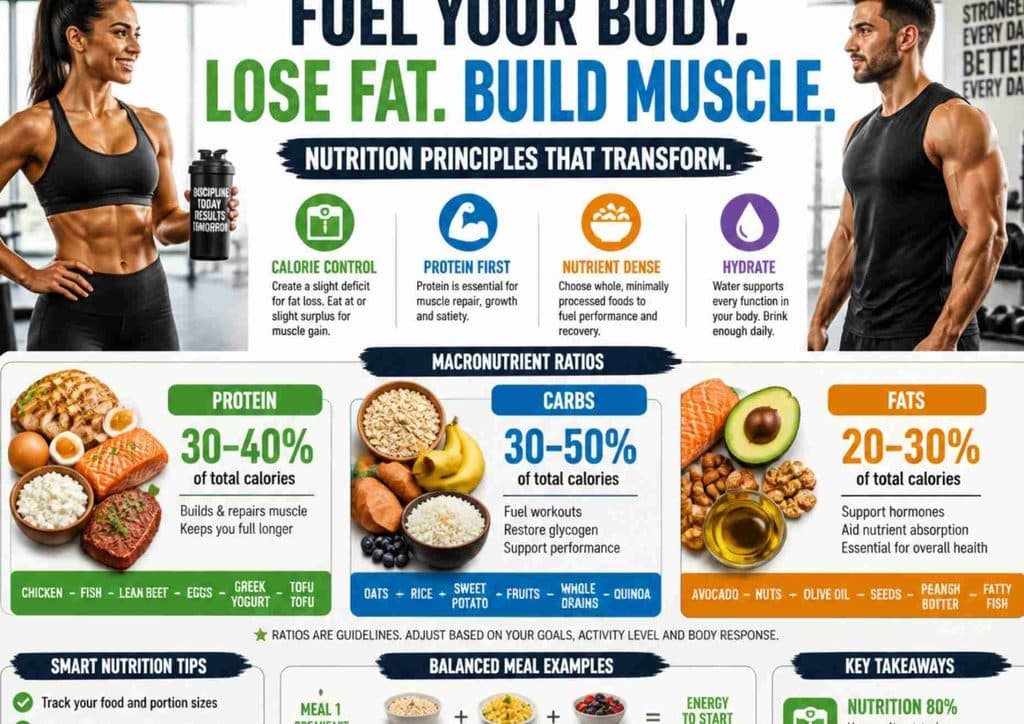
Understand changes in body weight
Muscle tissue, body fat, water and stored carbohydrates all contribute to your overall body weight.
Changes in hydration, food intake, digestion and carbohydrate storage can also influence what you see on the scales.
For example, you might be getting stronger, noticing improvements in muscle definition and finding that your clothes fit differently, despite very little change in your weight.

| Body Composition Variable | Physiological Contribution | Practical Observation | Recomposition Implication |
|---|---|---|---|
| Tissue Composition Shifts | Simultaneous gains in dense muscle tissue and losses in voluminous fat stores alter body shape without changing overall mass. | Assess garment fit, physical measurements, and mirror progress alongside scale data. | Confirms successful body recomposition even when bathroom scales remain completely static. |
| Hydration & Glycogen Storage | Stored carbohydrate molecules bind with water within muscle cells, causing normal short-term weight fluctuations. | Record daily weights under consistent conditions and evaluate weekly rolling averages. | Separates temporary fluid shifts from true long-term changes in adipose tissue. |
| Digestion & Intake Volume | Variations in food volume, sodium intake, and transit times impact daily scale readings. | Maintain consistent dietary habits and hydration routines around weigh-in days. | Prevents misinterpreting routine digestive fluctuations as setbacks in your physical progress. |

What should you track instead?
I recommend using several measures rather than relying on one number, particularly if your goal is to lose belly fat while maintaining muscle mass.
| Measure | What it tells you | How often to check |
|---|---|---|
| Body weight | General changes in overall body mass | Several mornings per week, using a weekly average |
| Waist measurement | Changes in abdominal circumference | Every 2 to 4 weeks |
| Progress photos | Visible changes in muscle definition and body shape | Every 4 weeks |
| Strength performance | Improvements in lifting capacity and training performance | Every training session |
| Clothing fit | Changes in how your clothes sit around your waist, hips and legs | Every 4 weeks |

What if your weight stops changing?
A weight loss plateau does not automatically mean you have stopped making progress.
Before changing your food intake, especially if you are not losing weight in a calorie deficit, look at your training performance, waist measurements, recovery, sleep and consistency.
If your strength is improving and your measurements are changing, your overall progress may be moving in the right direction even when your weight stays similar.
| Assessment Indicator | Underlying Mechanism | Practical Evaluation Method | Recomposition Interpretation |
|---|---|---|---|
| Training Performance Metrics | Progressive overload and strength gains indicate active muscle protein accretion despite static scale mass. | Review training logs to check if lifting weights or repetition counts are increasing over time. | Confirms successful muscle development whilst fat loss continues independently. |
| Anthropometric Measurements | Circumference reductions around the waist reflect adipose tissue mobilisation even when total body weight remains unchanged. | Take consistent tape measurements and monitor how snug or loose garments feel. | Provides tangible proof of positive body composition changes when scales fail to move. |
| Recovery & Lifestyle Consistency | Adequate sleep and stress management support optimal metabolic function and hormonal balance during recomposition. | Audit sleep duration, daily stress levels, and nutritional adherence before altering energy intake. | Prevents premature dietary restrictions and supports sustainable, long-term progress. |

Spread protein throughout the day
Include a protein source at breakfast, lunch and dinner, then add a protein rich snack if needed. This makes it easier to meet your daily requirements without relying on one large evening meal.

| Distribution Window | Physiological Principle | Practical Implementation | Recomposition Advantage |
|---|---|---|---|
| Frequent Daily Feeding | Stimulates muscle protein synthesis multiple times throughout the day rather than overloading a single meal. | Include a distinct protein source at breakfast, lunch, dinner, and an optional afternoon snack. | Maximises daily muscle repair efficiency and prevents excessive amino acid oxidation. |
| Appetite Regulation | Protein triggers the release of satiety hormones like PYY and GLP-1 whilst suppressing ghrelin. | Pair protein foods with fibre-rich vegetables or whole grains across all main meals. | Enhances fullness, reduces spontaneous snacking, and supports a modest energy deficit effortlessly. |
| Avoids Evening Overload | Distributing intake prevents digestive discomfort and large calorie loads late in the evening. | Target roughly equal portions of protein at each sitting instead of saving the bulk for dinner. | Improves sleep quality, digestion, and steady amino acid availability for overnight recovery. |

When a personalised plan helps by a nutrition professional
A personalised nutrition plan by a weight loss nutritionist or sports nutritionist can help when you are unsure how much to eat, how to distribute protein throughout the day or how to balance fat loss with your training demands.
Your nutritional requirements are influenced by your body composition, training frequency, exercise intensity, lifestyle, recovery and individual goals.

| Guiding Factor | Clinical Relevance | Practical Assessment | Recomposition Outcome |
|---|---|---|---|
| Individual Energy Requirements | Eliminates guesswork surrounding daily caloric intake and macro distribution for simultaneous fat loss and muscle gain. | Consult a qualified nutritionist to calculate precise targets tailored to your baseline metrics. | Removes trial and error, ensuring rapid progress towards body composition goals. |
| Training Demand Integration | Aligns nutritional fuel directly with lifting frequency, exercise intensity, and recovery capacity. | Adjust carbohydrate and protein timing around your weekly resistance training schedule. | Maximises workout performance whilst supporting continuous lean tissue repair. |
| Lifestyle & Preference Adaptation | Incorporates personal schedule constraints, food preferences, and metabolic history into a sustainable framework. | Build flexible meal structures that fit seamlessly into your daily professional and personal routine. | Promotes long-term dietary adherence and prevents the pitfalls of restrictive dieting. |

When your nutrition does not match your training
One common challenge is training consistently but not eating enough to support recovery.
Another is eating plenty of protein but overlooking carbohydrates, fibre and overall food quality.
Both situations can make it harder to maintain consistent training performance.
| Nutritional Mismatch | Physiological Impact | Practical Correction | Recomposition Benefit |
|---|---|---|---|
| Inadequate Total Energy Intake | Undermines muscular recovery, depletes glycogen stores, and leads to persistent training fatigue. | Increase overall calories slightly to meet the energy demands of consistent resistance training. | Restores strength output, enhances recovery capacity, and supports continuous muscle gain. |
| Overlooking Carbohydrates & Fibre | Compromises high-intensity workout performance and impairs digestive regularity. | Incorporate quality wholegrains, starchy tubers, fruit, and fibrous vegetables alongside protein. | Optimises training intensity, supports gut health, and maintains steady metabolic function. |
| Unbalanced Macronutrient Split | Focuses exclusively on protein while neglecting the broader nutritional foundation required for vitality. | Adopt a well-rounded meal structure that integrates healthy fats, complex carbs, and lean proteins. | Ensures sustainable long-term progress, hormonal balance, and optimal body composition shifts. |

When you are struggling to make progress
If you have been training regularly but are not seeing the changes you expect, it can be worth reviewing your overall approach.
Consider whether you are:
- Eating enough protein throughout the day.
- Consuming sufficient carbohydrates to fuel exercise.
- Following a progressive strength training programme.
- Allowing enough time for rest and recovery.
- Getting adequate sleep and managing everyday stress.
- Being consistent with your eating habits, including on weekends.
The goal is to establish an eating pattern that supports your training without making everyday life unnecessarily complicated.

| Review Parameter | Potential Pitfall | Practical Audit Action | Recomposition Correction |
|---|---|---|---|
| Protein & Carbohydrate Intake | Inconsistent daily protein distribution or insufficient glycogen fuelling for workouts. | Track daily food choices to ensure protein is spread across meals and carbs support training sessions. | Optimises muscle protein synthesis and restores high-intensity workout performance. |
| Training Progression & Recovery | Lack of progressive overload in the gym combined with inadequate rest days between heavy sessions. | Review training logs and schedule designated rest days to support muscular repair. | Ensures continuous tissue adaptation without overtraining or excessive fatigue. |
| Lifestyle & Habit Consistency | Sleep deprivation, high daily stress, or significant dietary deviations between weekdays and weekends. | Audit sleep duration, stress management, and weekend routine stability over a 14-day period. | Establishes sustainable habits that promote hormonal balance and steady, long-term progress. |

How should you approach the eating side?
- Establish your daily protein requirements based on your body weight and training goals.
- Build balanced meals around protein, vegetables, fibre rich carbohydrates and healthy fats using many of the best foods for weight loss.
- Adjust your overall energy intake to support gradual fat loss without compromising training.
- Distribute carbohydrates around exercise and allow enough food for recovery.

Why individual requirements matter
Two people following the same training programme may need quite different nutritional approaches, which is why there is rarely one perfect diet for everyone.
Someone training three times per week with a busy office job will have different requirements from someone completing five strength sessions alongside regular running.
A personalised plan should account for these differences rather than simply prescribing the same calorie intake and meal structure to everyone.

| Profile Variable | Metabolic & Training Context | Tailored Nutritional Adjustments | Recomposition Outcome |
|---|---|---|---|
| Low Training Frequency & Sedentary Occupation | Lower total daily energy expenditure and reduced glycogen depletion due to fewer weekly lifting sessions. | Calibrate moderate daily energy intake and scale carbohydrate portions down slightly on rest days. | Prevents unwanted fat accumulation while ensuring sufficient protein for muscle retention. |
| High Training Volume & Mixed Modalities | Substantial energy demands driven by frequent resistance training paired with endurance or running activities. | Increase total caloric intake and prioritise peri-workout carbohydrates to sustain energy output. | Supports optimal muscular recovery, prevents overtraining, and fuels high-performance output. |
| Lifestyle & Professional Schedule | Workplace stress, time constraints, and daily activity patterns influence overall recovery and dietary adherence. | Organise flexible meal structures and preparation routines that fit seamlessly into busy work schedules. | Promotes consistent habits, reduces nutritional friction, and secures long-term progress. |

Red flag: Get individual advice first
If you have a medical condition, take medication that may influence your nutritional requirements, are pregnant, postpartum or breastfeeding, or have a history of disordered eating, seek individual guidance from an appropriately qualified health professional before making significant dietary changes.
“You do not need to choose between losing fat and building muscle, but you do need to give your body the right nutrition, consistent strength training and enough time to adapt”.
Jake Biggs, Nutrition Longevity

What to do this week
- Include a protein source with every main meal.
- Complete your planned strength training sessions and record your performance.
- Take a waist measurement and record your starting point rather than relying exclusively on the scales.

Final thoughts
Body recomposition is not a quick fix or a restrictive diet, but rather a sustainable shift in how you fuel your body and challenge your muscles. By prioritising adequate protein distribution, following a healthy meal plan for weight loss, timing your carbohydrates to support your training sessions, and maintaining a modest energy deficit only when necessary, you create the ideal physiological environment to build muscle while reducing body fat.
Success in recomposition requires patience and a willingness to look beyond the bathroom scales, focusing instead on your strength gains, garment fit, and overall vitality. Ultimately, achieving a successful body composition transformation relies on consistency and personalisation over perfection, rather than chasing methods that promise how to lose weight fast.
Every individual responds differently to training demands, stress, sleep, and nutrition, meaning your approach should be tailored to fit your unique lifestyle rather than forcing a rigid template. By establishing flexible habits that you can maintain over the long term, you set the foundation for enduring physical progress, robust health, and a positive relationship with food and exercise.

How to lose body fat and build muscle together quiz
Test your understanding of simultaneous fat loss, muscle gain, scale weight dynamics, protein distribution, and individualised nutrition strategies.
1. What is the core objective of body recomposition?
2. Why might your bathroom scale weight remain static even when your clothes fit better and muscle definition improves?
3. What is the recommended strategy for distributing daily protein intake to support muscle protein synthesis?
4. What is the most appropriate action when your weight loss or recomposition progress appears to stall?
5. Why do individual nutritional requirements differ significantly between people following identical training programmes?
Mastering body recomposition is about consistent habits, patient tracking beyond bathroom scales, and tailoring nutrition to your unique lifestyle demands.

Frequently asked questions
How long does body recomposition take?
It is a gradual process that can take several months or longer. Your starting point, training experience, nutrition and consistency all influence how quickly you notice changes.
Do I need to be in a calorie deficit for body recomposition?
Not necessarily. A modest calorie deficit can help reduce body fat, but some people can build muscle and reduce fat while eating around their maintenance energy requirements.
How much protein do I need for body recomposition?
A general starting point for healthy adults undertaking regular resistance training is approximately 1.6 to 2.2 grams of protein per kilogram of body weight daily. Your individual requirements may differ depending on your circumstances and training demands.
How do I track progress without the scales?
Monitor your waist measurements, progress photos, strength improvements, gym performance and how your clothes fit. These measures can provide a more complete picture of changes in body composition.
Keep reading
This article is general information, not personal medical or nutritional advice. Individual needs vary. For guidance tailored to you, book a consultation.
Book a 60 minute consultation, in Bondi Junction or by Telehealth from anywhere in the world.