
The quick answer
Electrolyte drinks for runners can be useful during longer runs, particularly in hot conditions or when you sweat heavily. For most runs under an hour, water is generally enough, provided you are adequately hydrated and have eaten normally throughout the day.
The short version
- Electrolytes are not necessary for every run. For shorter sessions under an hour, water and balanced everyday nutrition will generally provide sufficient hydration without requiring additional electrolyte supplementation.
- Electrolytes become increasingly important as running demands increase. Longer distances, excessive sweating and hot conditions increase sodium losses, making electrolyte replacement an important consideration for endurance performance.
- Electrolytes should be part of your race day preparation. Practise your electrolyte and hydration strategy during training to understand your individual requirements, replace sweat losses and avoid costly nutrition mistakes on race day.
Electrolytes
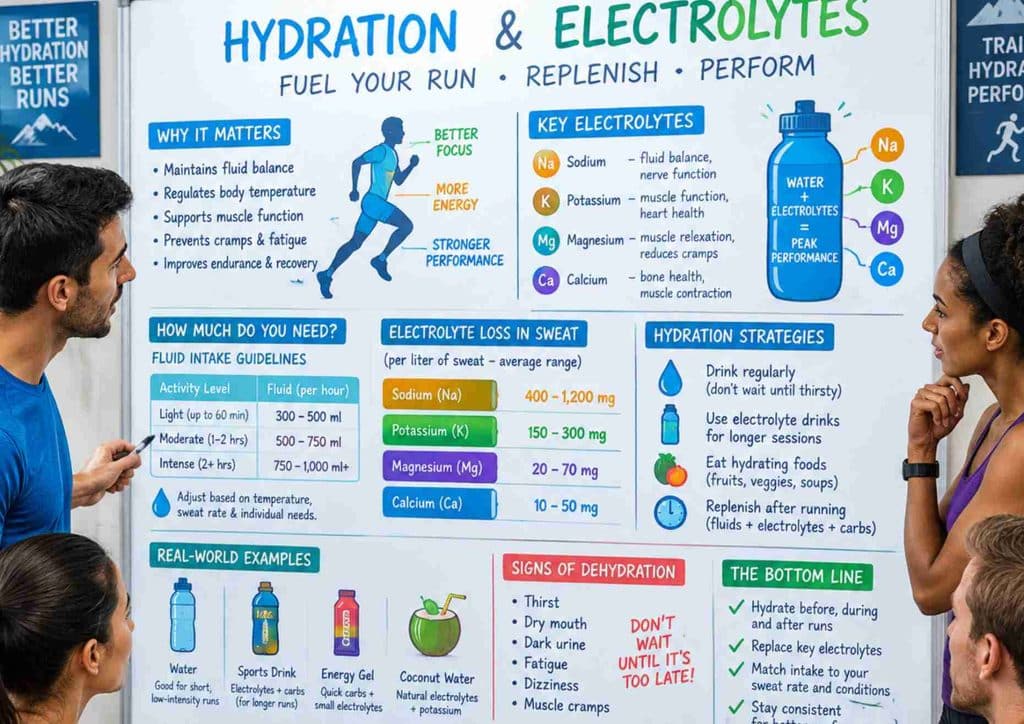
Electrolytes are minerals that carry an electrical charge when dissolved in body fluids. Sodium, potassium, magnesium and calcium help regulate fluid balance, muscle contraction and normal nerve function.

“Hydration is more than drinking water, and endurance is about more than simply putting in the kilometres. Understanding when your body needs electrolytes can be the difference between simply finishing a run and giving yourself the fuel to perform at your full potential”.
Jake Biggs, Nutrition Longevity

| Run | Conditions | What Usually Works |
|---|---|---|
| Short run under one hour | Mild weather | Water according to thirst |
| Long run over one hour | Moderate temperatures | Water alongside an appropriate carbohydrate and sodium strategy |
| Long run | Hot and humid conditions | Fluid and electrolytes according to sweat losses |
| Marathon training | Extended endurance sessions | Practised hydration, carbohydrate and sodium intake |
| Recovery after running | Heavy sweating | Water and a balanced meal containing sodium and other minerals |

Personalised running hydration and electrolyte needs calculator
Dial in your fluid and electrolyte approach for training and racing based on session duration, weather, sweat rate, and gut comfort. Select your running habits below to generate a clear, practical hydration plan.
Your Personalised Running Hydration Blueprint
Running for calls for a sensible balance of fluid, sodium, and gut friendly timing rather than guesswork or overdrinking.
Your tailored hydration recommendations
Want a personalised running hydration plan?
I will review your training sessions, sweat losses, race goals, and gut tolerance to build a practical hydration and fuelling strategy tailored to your routine.
Book a consultationThis interactive calculator provides general sports nutrition guidance for runners and is not a substitute for individualised clinical or sports dietetic advice.
“Runners do not need guesswork or rigid rules, nor do they require an electrolyte drink on every short jog. I built this interactive calculator to give runners a clear, practical way to match their fluid and sodium intake directly to their run duration, weather conditions, individual sweat losses, and stomach comfort so that every kilometre feels stronger and more consistent”.
Jake Biggs, Nutrition Longevity

Do runners need electrolyte drinks?
Not every runner needs electrolyte drinks, and I often find there is more confusion around hydration than there needs to be. The amount of fluid and electrolytes you require depends on how long you run, the weather, your sweat rate and how much sodium you lose through sweating.
When I look at running performance, I consider hydration alongside carbohydrate intake, daily nutrition and overall nutrition for runners and training demands. Drinking an electrolyte beverage does not automatically improve performance, particularly if you are completing a short run in comfortable conditions.
For shorter sessions, drinking water and eating balanced meals throughout the day will generally cover your requirements. However, as running duration increases, particularly during longer training sessions and races, replacing some of the sodium lost through sweat becomes more important.
I encourage runners to think about hydration as part of their overall nutrition strategy rather than something they only consider when they feel thirsty.

| Run | Conditions | What Usually Works |
|---|---|---|
| Short run under one hour | Mild weather | Water according to thirst |
| Long run over one hour | Moderate temperatures | Water alongside an appropriate carbohydrate and sodium strategy |
| Long run | Hot and humid conditions | Fluid and electrolytes according to sweat losses |
| Marathon training | Extended endurance sessions | Practised hydration, carbohydrate and sodium intake |
| Recovery after running | Heavy sweating | Water and a balanced meal containing sodium and other minerals |
When water is enough
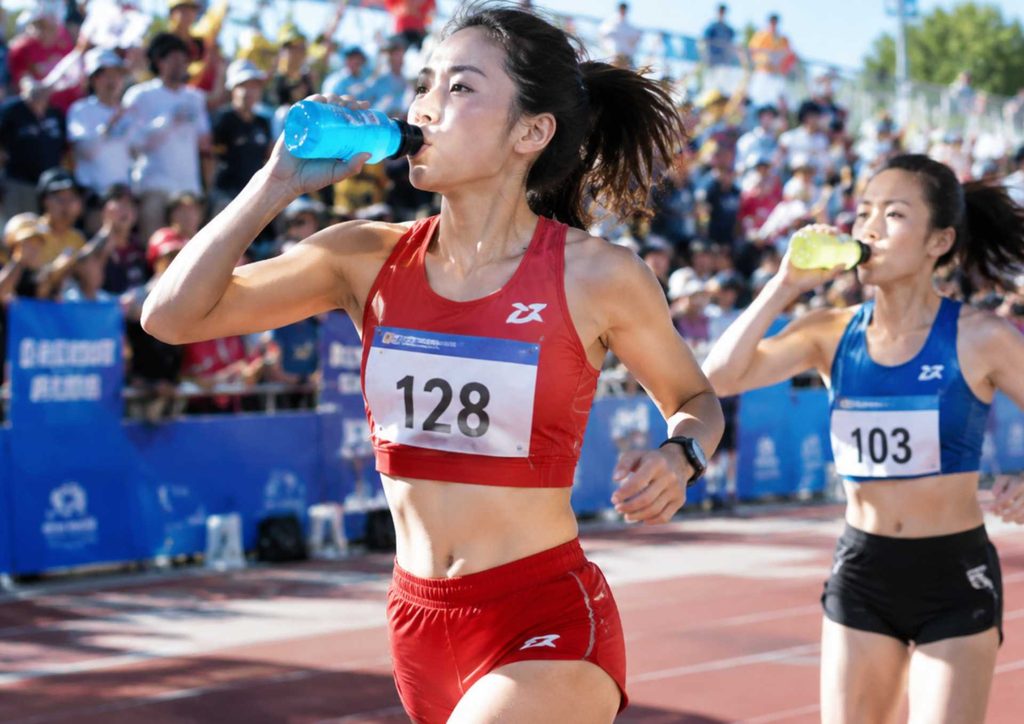
Water is generally enough for runs lasting around an hour or less, particularly when the weather is mild and you are starting your session adequately hydrated.
One mistake I regularly see is runners assuming they need a sports drink every time they exercise. This is not necessarily the case. If you are going for a comfortable 30 to 45 minute run, you generally do not need additional electrolytes during the session.
Your everyday diet also contributes to hydration and electrolyte intake, which is why understanding nutrition for athletes is important.
Foods such as fruit, vegetables, dairy products, wholegrains and other everyday ingredients provide minerals that support normal body function.
There is also no need to force yourself to drink large quantities of water before running. Drinking according to your thirst and considering the conditions is a more sensible approach.

| Hydration Factor | What Happens |
|---|---|
| Run Length | Water usually covers your needs for runs up to about an hour in mild weather when you start hydrated. |
| Short Easy Runs | A comfortable 30 to 45 minute run generally does not need extra electrolytes during the session. |
| Daily Food | Fruit, vegetables, dairy, wholegrains and everyday foods supply minerals that support normal fluid balance. |
| Pre Run Fluids | You do not need to force large amounts of water before running; drinking to thirst suits the conditions better. |
How long can you run without electrolytes?
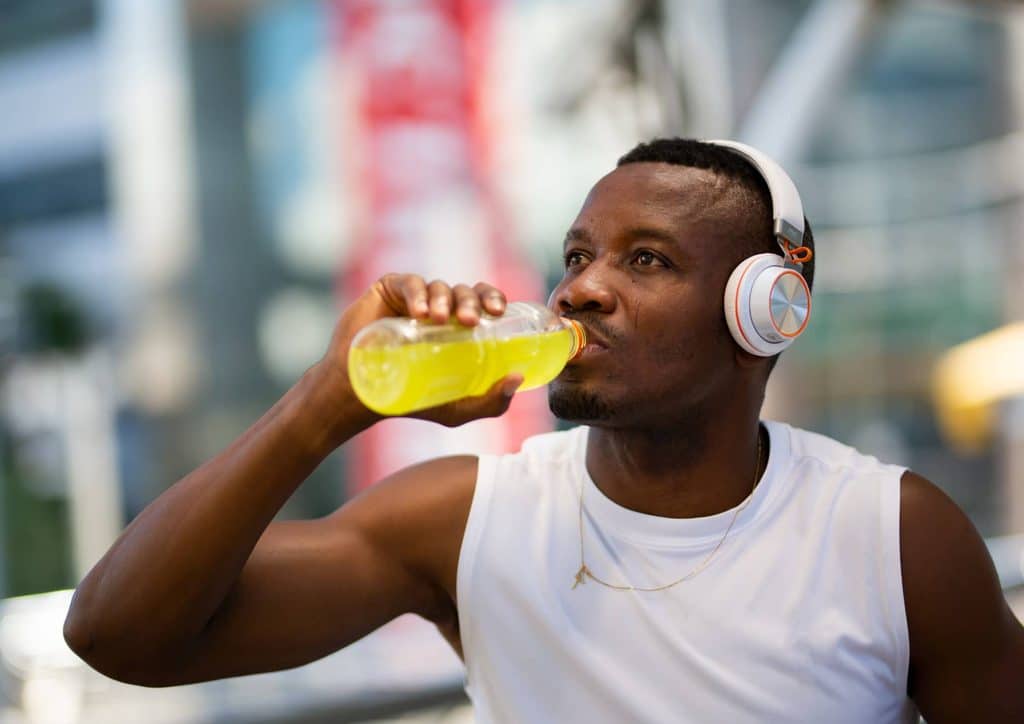
For shorter runs, your body can generally manage without additional electrolyte supplementation. However, the longer you exercise, the more important it becomes to consider your fluid and sodium losses.
I recommend paying attention to how you feel during training, the conditions you are running in and whether you are sweating more than usual.

| What Impacts You | How to Respond |
|---|---|
| Brief Session Time | Short runs do not deplete salt levels enough to require extra sports drinks. |
| Extended Time on Feet | As your run gets longer, your body loses more water and sodium that must be restored. |
| Personal Sweat Clues | Pay attention to how your body feels so you can catch thirst and fatigue early. |
| Warm Conditions | Hot weather makes you sweat more salt, making electrolytes important much earlier in the run. |

When electrolytes help
Electrolytes become more useful during longer runs, particularly when you are exercising for several hours, running in hot weather or losing substantial amounts of sodium through sweat.
Sodium is particularly important because it is the main electrolyte lost through sweating. Replacing some of these losses during prolonged exercise can help maintain fluid balance, particularly when combined with appropriate pre workout snacks and training nutrition.
This is particularly relevant for marathon runners, ultramarathon runners and anyone completing longer endurance sessions. Your hydration requirements during a two hour training run will be different from those during a short recovery run.
When working with a running nutritionist, I look at the individual rather than recommending the same hydration strategy to everyone. Sweat rate, running duration, environmental conditions and personal tolerance all influence what is appropriate.

| Key Scenario | Why It Matters |
|---|---|
| Extended Runs and Heat | Taking electrolytes helps most when you run for hours, train in hot weather, or sweat heavily. |
| Replacing Lost Sodium | Sodium is the main mineral lost in sweat, and replacing it helps keep your body in fluid balance. |
| Long Distance Events | Marathoners and endurance runners need a completely different hydration plan than short recovery runs require. |
| Individualised Strategy | Your ideal setup depends on your personal sweat rate, session length, weather, and stomach comfort. |
Why is sodium important for runners?
Sodium helps regulate the balance of fluids inside and outside your cells. It also plays an important role in normal nerve signalling and muscle function, including the processes involved in muscle cramps during exercise.
When you sweat heavily, you lose both water and sodium. Replacing fluid without considering sodium intake during prolonged exercise can become problematic, particularly if you drink excessive amounts of plain water.
This does not mean you need to consume large amounts of salt. Your requirements depend on your individual sweat losses and exercise demands.
| Sodium Role | How It Helps Your Run |
|---|---|
| Fluid Balance | Keeps water balanced inside and outside your cells so your body stays properly hydrated. |
| Nerves and Muscles | Supports normal nerve signals and steady muscle function while you run. |
| Heavy Sweating | Sweat removes both water and sodium, so drinking lots of plain water alone on long runs can cause problems. |
| Right Amount | You do not need massive salt doses; aim for what matches your sweat losses and run demands. |

Do runners need electrolytes in summer?
Running in Australian summer conditions can increase fluid and sodium losses because of higher temperatures and increased sweating.
I recommend adjusting your hydration strategy to suit the weather rather than following exactly the same routine throughout the year. A run that feels comfortable during winter may place considerably greater demands on your hydration during summer.
For longer sessions, electrolyte drinks for runners can provide a convenient source of fluid and sodium. It is worth practising your approach during training rather than introducing unfamiliar products on race day.
| Summer Factor | How to Adapt |
|---|---|
| Heat and Sweat Losses | Warm summer conditions raise sweat rates, increasing both fluid and sodium losses on the road or trail. |
| Seasonal Shifts | A winter route can feel completely different in summer, so adjust your intake to match the weather rather than sticking to one routine all year. |
| Convenient Sodium Source | Electrolyte drinks offer a practical way to top up fluid and sodium during longer hot weather runs. |
| Race Day Preparation | Test your drinks and timing during training runs first so your gut knows how to handle them before race day. |

Food and drink sources of electrolytes
You do not need to rely exclusively on sports drinks to obtain electrolytes. Everyday foods provide sodium, potassium, magnesium and calcium, which contribute to your overall mineral intake.
I generally encourage runners to establish a solid nutritional foundation through regular meals, including appropriate post workout meals and healthy snacks, before worrying about additional supplementation.
Some practical food sources include bananas, dairy products, potatoes, leafy green vegetables, nuts, seeds and foods containing sodium.
Coconut water is another option that provides fluid and potassium, although it generally contains less sodium than many sports drinks. This is worth considering if you are trying to replace substantial sodium losses during a long run.
For runners following a structured approach to nutrition, I consider the entire day of eating rather than focusing exclusively on what happens during exercise, including what to eat before running.

| Nutrition Pillar | Practical Takeaway |
|---|---|
| Daily Meals First | Build a strong base with regular meals supplying sodium, potassium, magnesium and calcium before adding supplements. |
| Whole Food Staples | Bananas, dairy products, potatoes, leafy greens, nuts, seeds and salted foods cover core minerals naturally. |
| Coconut Water Limits | Provides fluid and potassium, yet usually carries less sodium than sports drinks when sweat losses are high. |
| Full Day Nutrition | Shape your intake across the whole day of eating rather than relying only on what you take during a run. |

Which foods provide electrolytes?
Potassium is found in foods such as bananas, potatoes, avocado and leafy green vegetables, which can also feature in a healthy meal plan.
Calcium is available through milk, yoghurt, cheese and calcium fortified alternatives.
Magnesium is found in nuts, seeds, wholegrains and legumes.
Sodium is available through everyday foods, including bread, cheese and foods prepared with salt.
You can generally obtain these minerals through a varied and balanced diet without needing multiple supplements.

| Electrolyte Focus | Key Food Sources |
|---|---|
| Potassium | Bananas, potatoes, avocado and leafy green vegetables. |
| Calcium | Milk, yoghurt, cheese and calcium fortified alternatives. |
| Magnesium | Nuts, seeds, wholegrains and legumes. |
| Sodium | Everyday items like bread, cheese and foods prepared with salt. |
| Balanced Foundation | A varied everyday diet supplies these minerals without relying on lots of supplements. |

Prepare for summer running
Start your run adequately hydrated, avoid unnecessary fluid loading and plan access to water and electrolytes for longer sessions in the heat.

Good to know
Some runners have saltier sweat than others. White marks on clothing, salty residue on the skin and stinging eyes can be clues that you lose substantial sodium through sweating, although these signs cannot accurately measure your individual sodium losses.
Can you drink too much water?
Yes, drinking excessive amounts of water during prolonged exercise can cause a dangerous condition called exercise associated hyponatraemia.
This occurs when sodium in the blood becomes diluted, often because someone drinks more fluid than their body can eliminate through sweating and urination.
It is important to understand that drinking more water is not always better. Some runners become so focused on staying hydrated that they consume fluid beyond their actual requirements, highlighting the importance of understanding pink salt and electrolyte intake.
This is particularly concerning during marathons and other endurance events, where runners need to consider hydration alongside carbohydrate loading and their overall race day nutrition.
I recommend avoiding forced drinking and developing a hydration strategy that considers your individual requirements. Electrolyte drinks are not a guaranteed way to prevent hyponatraemia if you are still consuming excessive amounts of fluid.

| Overhydration Risk | What You Need to Know |
|---|---|
| Exercise Associated Hyponatraemia | Drinking too much water during long runs can cause a serious drop in blood sodium levels. |
| Diluted Sodium Levels | This happens when you drink faster than your body can clear fluid through sweat and urine. |
| More Is Not Better | Chasing extra fluids beyond what your body needs can hurt performance and safety. |
| Long Race Aid Stations | Drinking at every station over multi hour runs or marathons raises the risk of overdrinking. |
| Smart Fluid Limits | Skip forced drinking and match fluid to your actual needs; sports drinks do not prevent overdrinking. |

How can you avoid overhydrating during a race?
Start by understanding your usual fluid requirements during training. Pay attention to thirst, the weather and how much you sweat rather than automatically drinking at every opportunity.
Avoid drinking excessively before the event and do not attempt to compensate for missed fluids by consuming large quantities at once.
Practise your hydration strategy during longer training sessions so that race day does not become an experiment.

| Race Day Habit | Practical Action |
|---|---|
| Know Your Baseline | Learn how much fluid you normally need in training before race day arrives. |
| Read the Moment | Use thirst, weather and sweat levels as your guide rather than grabbing a cup at every station. |
| Skip Pre Race Flooding | Do not overdrink before the start or chug huge amounts later to make up for skipped drinks. |
| Rehearse in Training | Test your race hydration plan on long runs so race day brings no surprises. |

Red flag: Possible hyponatraemia
Confusion, a severe or worsening headache, vomiting, unusual drowsiness or seizures during or after prolonged exercise require urgent medical attention. These symptoms can indicate a serious medical emergency. Call 000 in Australia. Do not assume that drinking more water or taking salt will resolve the problem.

“Hydration is not about drinking as much as possible, it is about giving your body the fluid and electrolytes it actually needs to perform”.
Jake Biggs, Nutrition Longevity

When a sports nutritionist can help
A sports nutritionist can help you understand your hydration requirements, organise your nutrition around training and develop a practical strategy for longer running sessions.
I often find that runners focus heavily on their training schedule but overlook how their everyday eating and drinking habits influence their ability to support that training, particularly when balancing running for weight loss.
Getting your nutrition organised can help remove unnecessary guesswork, and understanding what a sports nutritionist does can help you make informed decisions about your training nutrition.

| Focus Area | How It Helps You |
|---|---|
| Hydration and Fuel Plan | Clarifies fluid needs, times intake around sessions, and builds a workable plan for longer runs. |
| Daily Habits Beyond Miles | Aligns everyday food and drink choices with training demands rather than focusing only on the run log. |
| Clearer Execution | Cuts out guesswork so you know what your body actually needs to train well. |

How can a running nutritionist help?
A running nutritionist can assess your training volume, running intensity, sweat losses and everyday dietary intake to help establish an appropriate hydration strategy.
This can include working out when water is sufficient, when additional sodium may be useful and how to organise fluid intake around different training sessions.

| Assessment Area | Practical Outcome |
|---|---|
| Training and Sweat Profile | Reviews your mileage, intensity, sweat losses, and daily diet to build a tailored hydration plan. |
| Water vs Sodium Calls | Helps pinpoint when plain water does the job and when extra sodium adds real value. |
| Session Timing | Structures fluid intake around different workouts so you stay steady from start to finish. |

When should you see a marathon running nutritionist?
If you are preparing for a marathon or another endurance event, working with a marathon running nutritionist can help you develop a more comprehensive race day nutrition plan.
This includes considering fluid intake, sodium replacement, carbohydrate intake and how to practise your strategy during longer training sessions.

| Marathon Prep Area | How It Sets You Up |
|---|---|
| Race Day Blueprint | Builds a full race day nutrition plan for marathons and long endurance events. |
| Fluid, Sodium and Carbs | Balances drinks, sodium replacement, and carbs to keep energy steady over hours of running. |
| Long Run Testing | Helps you practise your plan on long training runs so your body handles it smoothly on race day. |
What to do this week
- Pay attention to your fluid intake during training.
- Practise your hydration strategy during your next long run.
- Include potassium, magnesium and calcium rich foods in your everyday meals.

Final thoughts
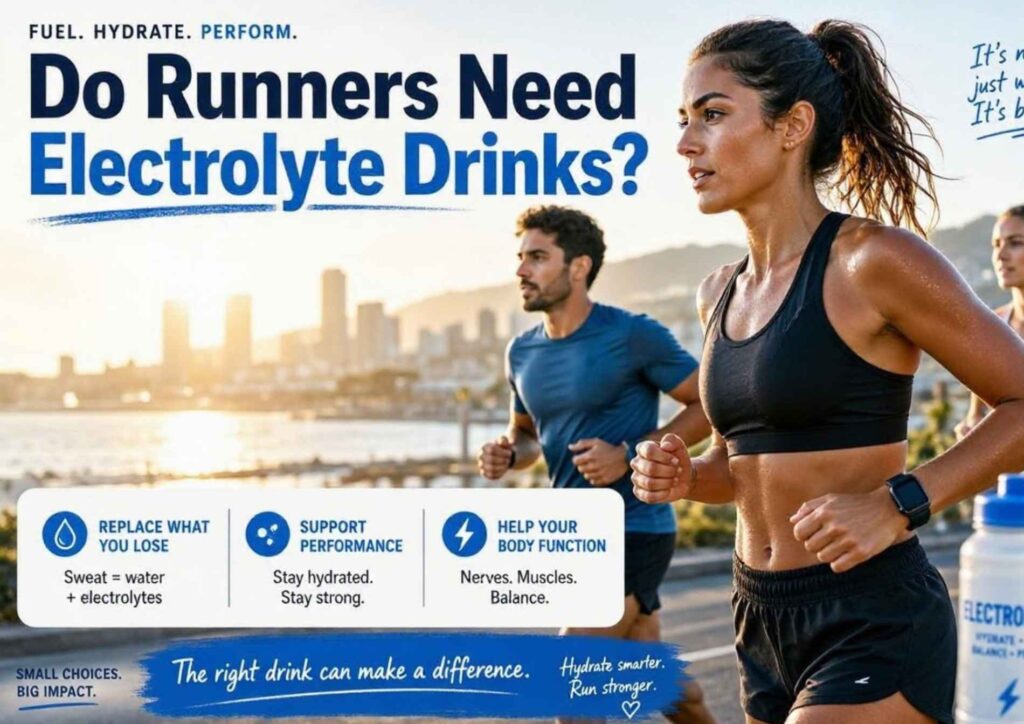
My approach to electrolytes is straightforward. You do not need electrolyte drinks for every run, and drinking more does not automatically mean you are better hydrated.
For shorter runs, water is generally enough. For longer sessions, particularly in hot conditions or when you sweat heavily, additional electrolytes may be useful alongside appropriate nutrition to support muscle growth.
I encourage runners to understand their individual requirements, eat a balanced diet and practise their hydration strategy before race day. The goal is to support your training without overcomplicating something that should be relatively straightforward.

Do runners really need electrolyte drinks quiz
Test your understanding of when water is enough, when sodium matters, everyday food sources, summer adjustments, and avoiding overhydration.
1. When is plain water usually enough during a run?
2. When do electrolytes become more useful for runners?
3. How do everyday foods fit into a runner’s electrolyte intake?
4. What should you keep in mind when running in warmer months like an Australian summer?
5. How can runners avoid overhydrating and exercise associated hyponatraemia?
Smart hydration matches your fluid and sodium to run length, weather, sweat rate, and personal needs without overdrinking.

Frequently asked questions
Is coconut water good for runners?
Yes, coconut water provides fluid and potassium. However, it generally contains less sodium than sports drinks, so it may not adequately replace sodium during prolonged exercise.
Are sports drinks bad for you?
Not necessarily. They can be useful during prolonged exercise, although they are generally unnecessary for shorter runs.
How much should I drink on a long run?
It depends on your sweat rate, running duration, weather and individual requirements. Drink according to thirst and practise your approach during training.
What are the signs I need more salt?
Heavy sweating, salty residue on clothing and white marks on your skin can suggest higher sodium losses. However, these signs are not a reliable measure of your exact requirements.

Keep reading
This article is general information, not personal medical or nutritional advice. Individual needs vary. For guidance tailored to you, book a consultation.
Book a 60 minute consultation, in Bondi Junction or by Telehealth from anywhere in the world.